Medically reviewed by Dr. Pankaj Bagwari, BAMS (General Physician) · July 25, 2026
Last updated: July 25, 2026
Ripple is a zero-nicotine, plant-based device, so it avoids the biggest problem with normal vapes: nicotine and the addiction that comes with it. That makes it lower-risk than a nicotine disposable. It does not make it safe. A Ripple still heats a liquid into an aerosol that goes deep into your lungs, and that aerosol is made of propylene glycol, vegetable glycerin, flavorings, and plant and essential-oil compounds. Inhaling that mix every day is barely studied, and the research that does exist is not reassuring.
Here is what a Ripple actually is, what is inside it, what the evidence says about breathing it in, and who should stay away.
At a glance
| Question | Short answer |
|---|---|
| Is Ripple vape bad for you? | Lower-risk than a nicotine vape, but not safe. You still inhale a heated aerosol. |
| What is a Ripple? | A zero-nicotine, plant-based “aromatherapy diffuser,” sold as a way to quit vaping |
| Nicotine strength | 0 mg, zero nicotine |
| Main ingredients | Propylene glycol and vegetable glycerin, plus plant extracts, flavorings, and aroma compounds |
| FDA-approved? | No. The brand itself makes no medical claims |
| Puffs | Around 1,000 per device |
| Main risks | Airway irritation, untested plant and essential-oil inhalation, unknown long-term effects |
| Age to buy | Sold as 21 or older |
What is a Ripple vape?
Ripple, sold as Ripple+ by The Ripple Co, is a prefilled disposable device that the company calls a plant-based “aromatherapy diffuser” rather than a vape. It holds no nicotine and no tobacco, and it is marketed heavily as a way for people to step away from nicotine vaping, with the brand claiming more than a million users who have switched. Each device runs for about 1,000 puffs, then it is thrown away or the pod is replaced.
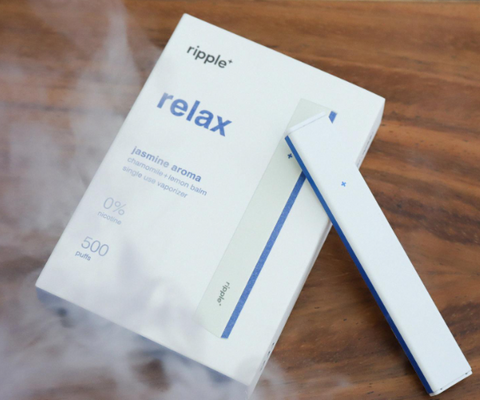
The brand is careful with its wording. Ripple+ says its statements have not been evaluated by the FDA or other medicine regulators, and that the product is not meant to diagnose, treat, cure, or prevent any disease. In plain terms, Ripple markets a calmer ritual and a nicotine-free habit, not a proven health product. That honesty in the fine print matters, because the marketing around it often makes vaping a plant blend sound automatically healthy.
What is inside a Ripple vape?
A Ripple does not give off water vapor or pure plant essence. It heats a liquid into an aerosol of fine droplets that you pull into your lungs. The base of that liquid is propylene glycol and vegetable glycerin, the same two carrier ingredients used in nicotine vapes. On top of that base sit natural flavorings and a set of plant extracts and aroma compounds, which change by blend and can include ginkgo biloba, ginseng, chamomile, lavender, green tea, and essential-oil compounds such as linalool and geraniol.
None of that contains nicotine, which is a real point in its favor. The catch is that “plant-based” describes where an ingredient comes from, not whether it is safe to breathe. Propylene glycol and vegetable glycerin are both cleared as safe to eat, yet as a Cleveland Clinic pulmonologist puts it, “just because something’s edible doesn’t mean you should inhale it” (Cleveland Clinic). When these carriers are heated by a coil, they can break down into new irritants like formaldehyde and acetaldehyde that were never in the original liquid. That same flavored aerosol also passes over your mouth and teeth on the way in, part of why vaping is tied to effects like yellowing teeth and other oral signs a dentist can often spot.
Is Ripple vape bad for you? What the evidence shows
Removing nicotine changes the picture in a real way. Nicotine is the ingredient behind vaping addiction, and it raises heart rate and blood pressure and can harm a developing brain. A true zero-nicotine device does none of that, so a Ripple is clearly lower-risk than a nicotine disposable such as a Luto or an Elf Bar.
Lower-risk is not the same as safe, and the research on nicotine-free aerosol is not comforting. A 2024 study tested an aerosol made from only propylene glycol and vegetable glycerin, with no nicotine and no flavor added, and it still caused airway inflammation and a thick buildup of mucus in human airway cells and in animals (Scientific Reports). The base liquid alone, the part every Ripple contains, was enough to irritate the lungs. Two 2019 heart studies go further: healthy people who had never smoked showed reduced blood flow about an hour after a single nicotine-free session (NHLBI), and e-cigarette flavorings damaged blood-vessel cells in the lab even with no nicotine present (Stanford Medicine).
So the honest read is that a Ripple takes away the single biggest problem with vaping, nicotine, while still asking your lungs and blood vessels to process a heated aerosol every day, with the added twist of plant compounds that have almost no inhalation research behind them.
What the research shows: five findings on nicotine-free and plant vaping
Most pages that rank for this question make safety claims without a single citation. Below is a plain-language roundup of what published studies and health bodies have actually found about inhaling nicotine-free and plant-based vapor. Three of these tested aerosol with no nicotine at all, so the effects trace to the base liquid, the flavorings, and the plant compounds, not the drug.
| Study or source | Year | What it looked at | What it found |
|---|---|---|---|
| Scientific Reports (Nature) | 2024 | Aerosol of propylene glycol and vegetable glycerin only, no nicotine or flavor | Airway inflammation and thick mucus in human airway cells and in animals (link) |
| Radiology (NHLBI-funded), Caporale et al. | 2019 | 31 adults who had never smoked; one nicotine-free session of 16 puffs | Reduced blood flow and lower blood oxygen about an hour later (link) |
| Journal of the American College of Cardiology (Stanford) | 2019 | E-cigarette flavorings on human blood-vessel cells | Flavorings damaged the cells even with no nicotine; cinnamon and menthol were among the worst (link) |
| American Lung Association | 2024 | Inhaling essential oils and diffuser vapor | Can irritate the airways and trigger tightening of the airways in sensitive people; “adding anything … to the air you breathe is not recommended” (link) |
| National Academies of Sciences | 2018 | Review of e-cigarette flavoring chemicals | Many food-safe flavors have never been tested for inhaling; some flavor chemicals are tied to lung damage (link) |
The pattern is consistent. Taking nicotine out lowers the risk, but it does not erase it, and the plant and flavor side of a Ripple carries its own question marks for the lungs and the blood vessels.
The “plant-based” question: is it safe to breathe?
This is where Ripple deserves a closer look than its competitors give it, because “plant-based” is doing a lot of marketing work. A check of the published evidence for every ingredient Ripple names turns up an uncomfortable gap: nearly all of them are recognized as safe to eat or put on skin, but there is little or no research on what happens when you heat them and breathe them in.
| Ripple ingredient | Recognized as safe to… | Research on inhaling it |
|---|---|---|
| Propylene glycol | Eat (food additive) | Limited; can irritate the airways when inhaled |
| Vegetable glycerin | Eat (food additive) | Limited; forms irritants like acrolein when heated |
| Natural flavorings | Eat (GRAS food status) | Not assessed for inhaling; the flavor industry says so itself |
| Aroma compounds (linalool, geraniol) | Use in food and cosmetics | Little inhalation data; essential-oil vapor can irritate airways |
| Ginkgo biloba extract | Take as an oral supplement | No meaningful inhalation-safety research |
| Ginseng extract | Take as an oral supplement | No meaningful inhalation-safety research |
| Chamomile and lavender | Drink, apply, or diffuse | Inhaled can trigger airway tightening in sensitive people |
| Green tea extract | Drink | No meaningful inhalation-safety research |
Two authorities make the point bluntly. FEMA, the industry body that grants flavors their “safe to eat” status, states plainly that its safety reviews cover eating only and that calling a flavor food-safe for use in a vape is “false and misleading” (FEMA). The American Lung Association is just as direct about botanicals: inhaling essential oils “can irritate the respiratory tract,” and “adding anything … to the air you breathe is not recommended” (American Lung Association). Ginkgo and ginseng have been studied for years as pills you swallow, not as vapor you inhale, so their long history of oral use says nothing about heating them and breathing them into your lungs.
None of this proves a Ripple will harm you. It means the “plant-based” label answers a question nobody was worried about, the source of the ingredients, while leaving the real question, what heating and inhaling them does, mostly unanswered.
Can a Ripple help you quit vaping?
It might help some people as a stepping stone. Because it copies the flavor and the hand-to-mouth ritual of vaping without any nicotine, some nicotine vapers use a device like Ripple to keep the habit going while they drop the drug. That is the sensible case for it, and it is how the brand positions itself.
The honest caveats are two. No health authority has approved Ripple, or any plant-based diffuser, as a proven way to quit, and the brand itself makes no medical claims. And keeping the inhaling ritual alive can make it harder for some people to stop completely, since the motion and the routine are part of what keeps vaping sticky. Anyone trying to quit nicotine can call the free national quitline at 1-800-QUIT-NOW for support that is backed by evidence and costs nothing.
Is Ripple vape FDA-approved?
No. The FDA’s vape review applies to products that contain nicotine, and a zero-nicotine, tobacco-free device like Ripple generally falls outside that system. The brand does not claim FDA approval, and its own label notes that its statements have not been evaluated by the FDA or other medicine regulators. That is not a loophole in the buyer’s favor. It means no regulator has reviewed the ingredients, the plant extracts, or the manufacturing of these diffusers for what happens when they are inhaled. “Not reviewed” is not the same as “safe.”

Who should not use a Ripple?
Some people should skip it entirely, even with no nicotine involved:
- Anyone under 21. These are sold as adult products, and a young person’s lungs should not be taking on a heated aerosol.
- People who have never vaped or smoked. There is no health reason to start inhaling an aerosol you were not using before.
- Anyone who is pregnant. The effect of inhaling these plant and flavor compounds during pregnancy is not established, so the cautious choice is none.
- People with asthma, COPD, or other lung conditions, since both the aerosol and the essential-oil compounds can tighten and irritate sensitive airways.
This article is general information and is not a substitute for personal medical advice. For guidance about your own health, talk to a doctor.
Bottom line
Is Ripple vape bad for you? It is less bad than a nicotine vape, and that is a real distinction. With zero nicotine, a Ripple avoids the addiction and the heart and brain effects that make regular disposables so risky. What it does not avoid is the act of inhaling a heated aerosol of propylene glycol and vegetable glycerin carrying flavorings and plant compounds, which the evidence links to airway irritation and blood-vessel changes, and much of which has never been tested for inhaling at all. For a current nicotine vaper using it to drop the drug, it is a lower-risk option worth considering. For someone who does not vape, and for anyone under 21, the smart answer is to leave it alone.
Frequently asked questions
Is Ripple vape bad for you?
It is lower-risk than a nicotine vape because it has no nicotine, so there is no addiction and none of nicotine’s heart or brain effects. It is not safe, though. You still inhale a heated aerosol of propylene glycol, vegetable glycerin, flavorings, and plant compounds, which research links to airway irritation.
Does Ripple vape contain nicotine?
No. Ripple is sold as a zero-nicotine, tobacco-free device, and the brand markets it as a way to move away from nicotine vaping. It contains no nicotine at any strength.
Is Ripple vape safe for your lungs?
Safer than a nicotine vape, but not proven safe. A 2024 study found that a plain propylene glycol and vegetable glycerin aerosol, with no nicotine or flavor, still caused airway inflammation. Inhaling essential-oil and plant compounds can also irritate the airways, and there is little research on breathing them in.
Is “plant-based” vaping actually healthy?
Not necessarily. “Plant-based” describes where the ingredients come from, not whether they are safe to inhale. Most of Ripple’s ingredients are recognized as safe to eat or apply to skin, but there is little or no research on heating them and breathing them into the lungs.
Can nicotine-free vaping affect your heart?
It can. A 2019 study in Radiology found that healthy people who had never smoked showed reduced blood flow about an hour after a single nicotine-free session. A separate Stanford study found that vape flavorings damaged blood-vessel cells even with no nicotine present.
Can a Ripple help you quit vaping?
It may work as a stepping stone, since it copies the flavor and hand-to-mouth habit without the drug. No health authority has approved it as a proven quit aid, though, and the brand makes no medical claims. The free quitline 1-800-QUIT-NOW offers support backed by evidence.
What is inside a Ripple vape?
The liquid is mostly propylene glycol and vegetable glycerin, plus natural flavorings and plant extracts and aroma compounds that vary by blend, such as ginkgo, ginseng, chamomile, lavender, green tea, linalool, and geraniol. There is no nicotine.
Is vaping a Ripple every day bad for you?
Daily use means your lungs process a heated aerosol over and over, including plant and flavor compounds that are not tested for inhaling. Even without nicotine, that repeated exposure can irritate the airways, and the long-term effects are not known.
Is Ripple vape FDA-approved?
No. The FDA vape review applies to nicotine products, and a zero-nicotine, tobacco-free device like Ripple falls outside it. The brand does not claim FDA approval, and no regulator has reviewed these diffusers for inhalation safety.
How many puffs does a Ripple have?
Ripple devices are rated for about 1,000 puffs each, sold either as a single device or as pods. Once the liquid runs out, the device or pod is replaced.
Sources
- Cleveland Clinic: Nicotine-free vaping, what you should know
- Scientific Reports (Nature), 2024: PG and VG aerosols induce airway inflammation and mucus hyperconcentration
- Radiology / NHLBI, 2019 (Caporale et al.): Nicotine-free e-cigarettes may damage blood vessels after a single use
- Journal of the American College of Cardiology / Stanford Medicine, 2019: E-cigarette flavorings may increase heart disease risk
- American Lung Association: Essential oils, more harmful than helpful?
- FEMA (Flavor and Extract Manufacturers Association): Safety assessment of flavors covers ingestion, not inhalation
- National Academies of Sciences, via NCBI Bookshelf: Toxicology of e-cigarette constituents

Alex is a vaping enthusiast with 6 years of hands-on experience across disposable vapes, pods, e-liquids, and flavors. He shares his reviews, insights, and practical tips on vaping with the PureVapeReviews community to help readers make better-informed choices.