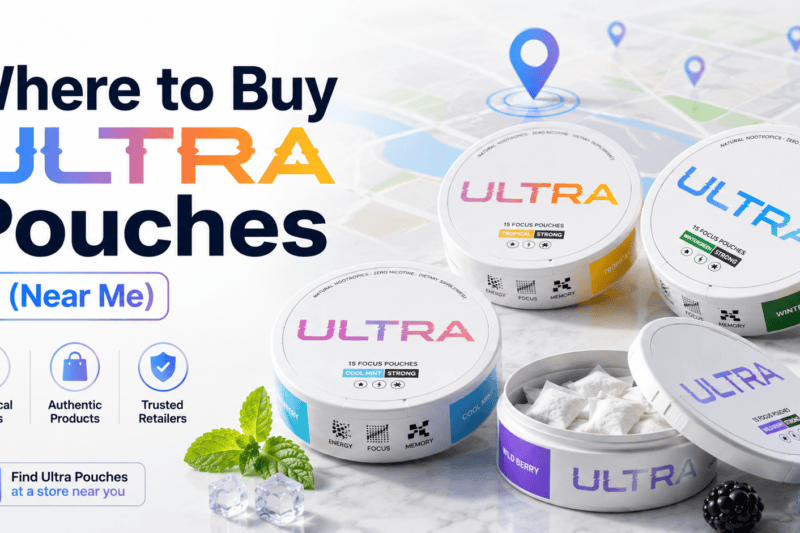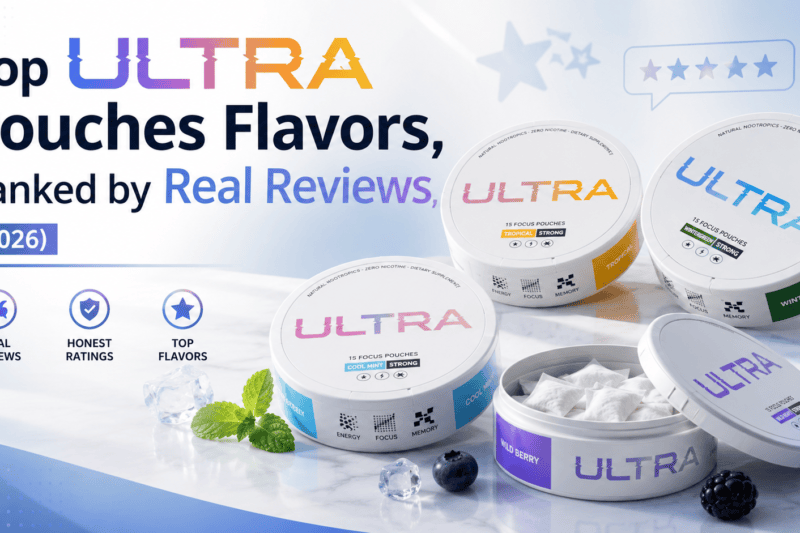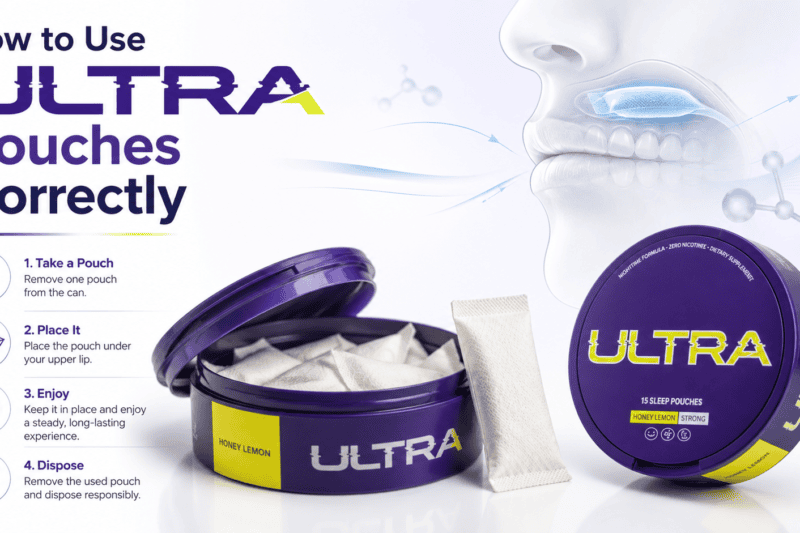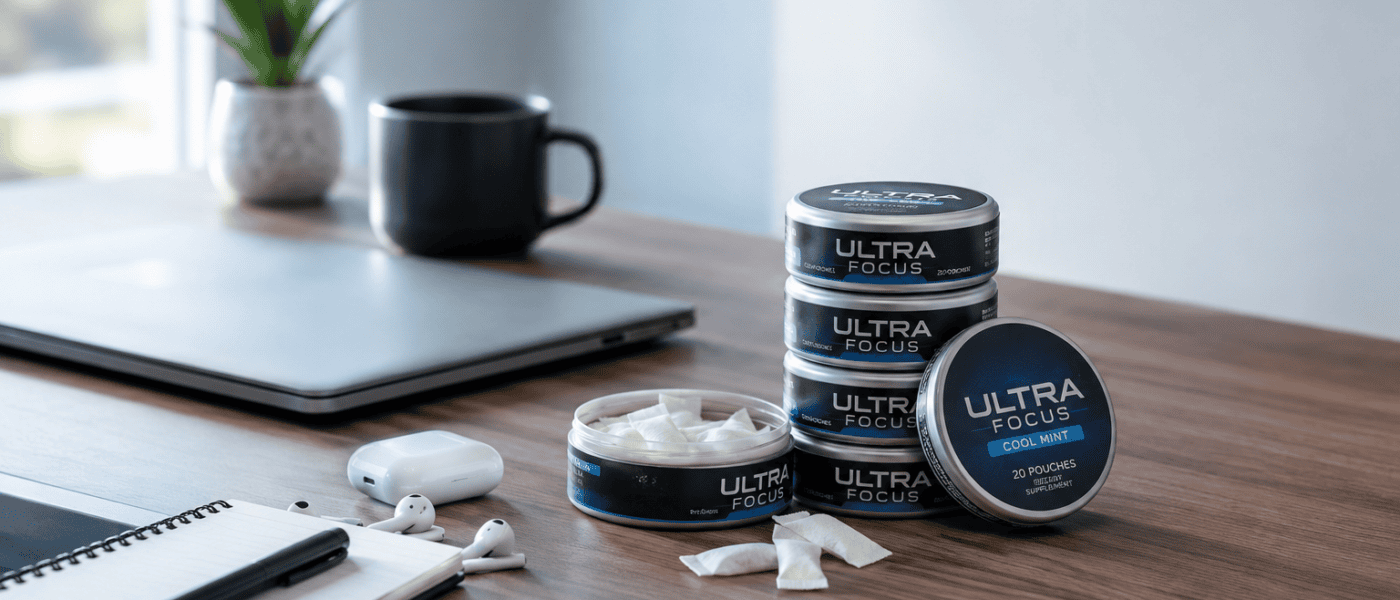
Ultra Pouches are one of the buzziest products in the fast-growing “energy pouch” category, and almost every review of them online has a catch: it is written by a competing brand steering you toward its own pouch. This Ultra pouches review takes a different approach. It is independent, it is built on the published research behind Ultra’s active ingredient, and it is transparent about what is proven, what is marketing, and where Ultra quietly falls short of its own science.
How this review was done (our promise of transparency): This is an evidence-based review, not a paid or sponsored one, and we are not a pouch brand. Our analysis is drawn from Ultra’s published ingredient list, the peer-reviewed studies on those ingredients, a price-and-value breakdown, and an analysis of verified customer reviews across public platforms. Where we could not independently confirm a figure, we say so plainly.
The Verdict at a Glance
| What it is | A nicotine-free, tobacco-free oral “energy pouch” built around paraxanthine (a caffeine alternative) |
| Main active | Paraxanthine (branded enfinity), plus L-theanine, alpha-GPC, panax ginseng, B-vitamins |
| Best for | People who want caffeine-style focus without the jitters, nicotine, or a drink |
| Biggest strength | Its active ingredient has real peer-reviewed research behind it |
| Biggest catch | It appears to use about half the dose used in that research, and hides the rest in a proprietary blend |
| Our evidence-based rating | 3.5 / 5 |
The short answer: Ultra is one of the more credible products in a hype-heavy category because paraxanthine is genuinely backed by science, which is more than most “focus pouches” can say. But Ultra looks under-dosed against the studies it leans on, its full formula is a proprietary blend, and it sits at a premium price. Promising, not perfect.
Ultra Pouches in Brief
Ultra Pouches take the familiar under-the-lip pouch format and swap the nicotine for paraxanthine, a caffeine relative, so a can that looks like Zyn actually delivers energy and focus rather than a nicotine hit, with no tobacco and no sugar. For the full explainer on how the pouch works and what paraxanthine is, see the guide on what Ultra pouches are.
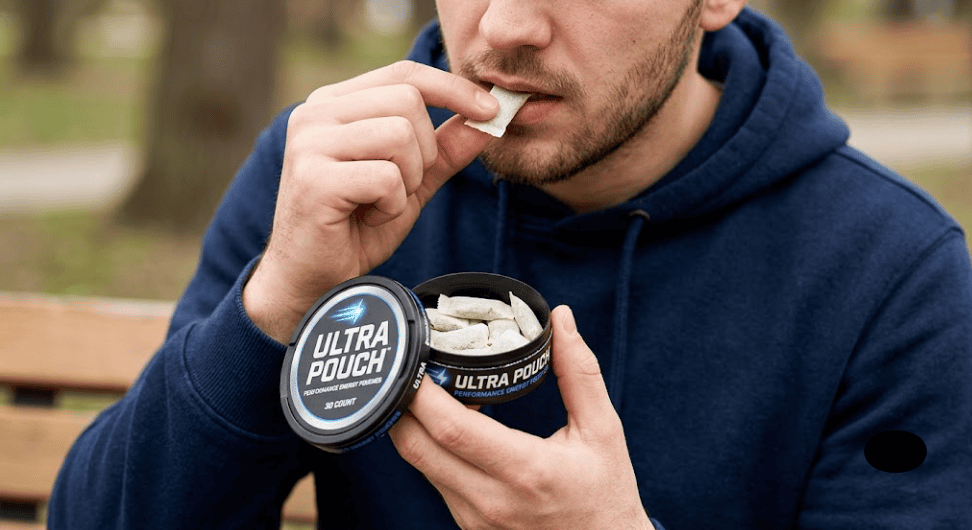
Ultra’s flagship is its Focus line, which is what most people mean when they search for “Ultra Focus pouches,” and it is the product this review is about. Ultra also makes a separate Sleep pouch built around melatonin instead of paraxanthine, which we cover in its own Ultra Sleep Pouches review.
What Is Actually Inside Ultra Pouches?
This is where a review earns its keep, because the ingredient label is the honest story of whether a product can do what it claims. Ultra’s blend centers on paraxanthine and adds several supporting ingredients:
- Paraxanthine (enfinity) – the star, a caffeine alternative
- L-theanine – an amino acid linked to calm focus
- Alpha-GPC – a choline compound studied for cognition and power
- Panax ginseng – an herb used for fatigue and mental performance
- B-vitamins – involved in normal energy metabolism
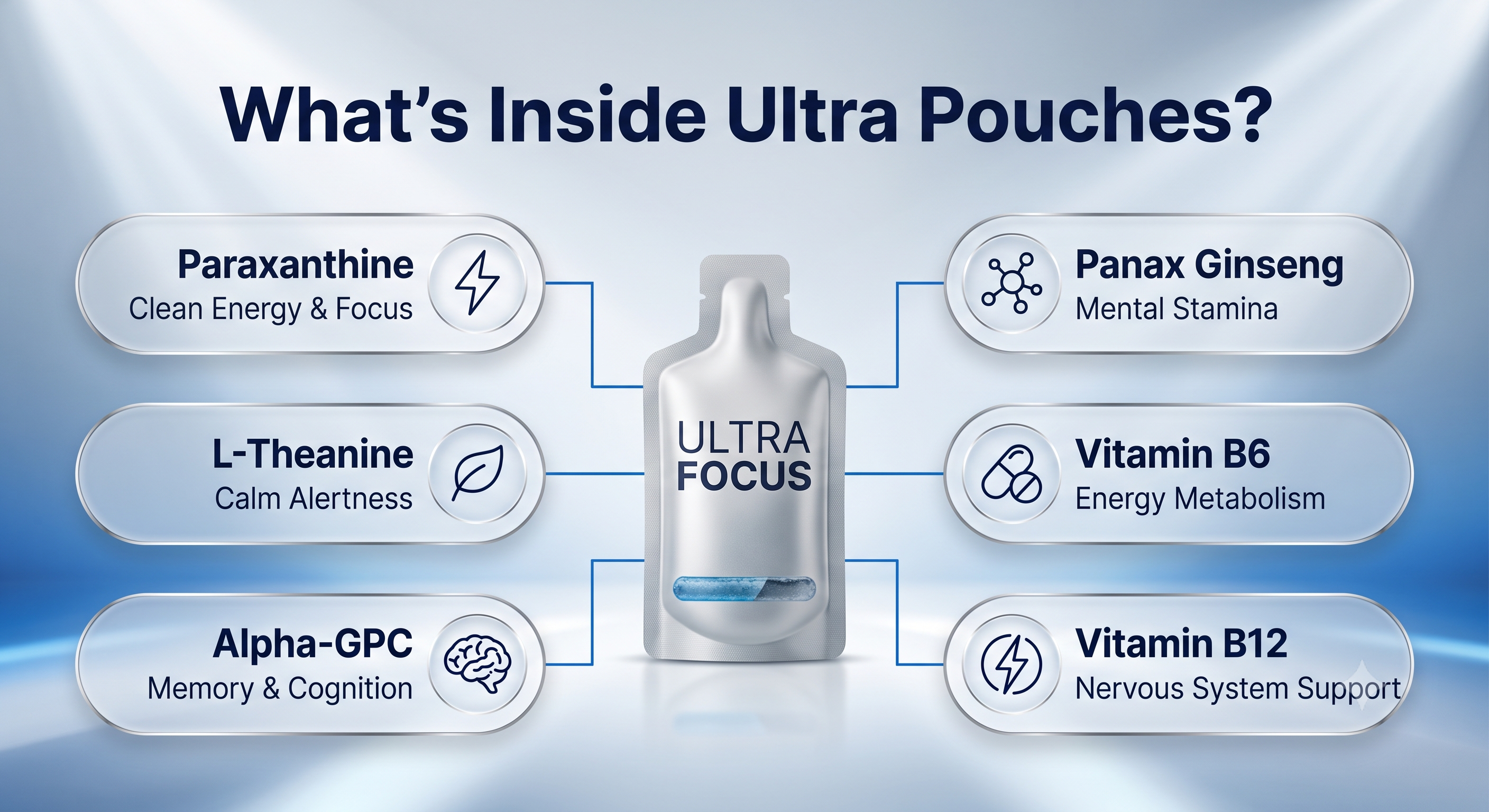
Here is what the research actually says about each, alongside the dose used in studies and what Ultra discloses. This is the table no competing review will show you, because it exposes where the formula is strong and where it is thin. For a plain-English look at each one, see our full Ultra Pouches ingredients breakdown.
| Ingredient | What the research suggests | Typical studied dose | Ultra’s disclosed dose |
|---|---|---|---|
| Paraxanthine (enfinity) | Improved reaction time and cognitive accuracy vs placebo; fewer errors than caffeine; no adverse side effects in trials | 200 mg (Yoo 2024) | 100 mg (confirmed; raised from 75 mg in Jan 2026) |
| L-theanine | Improves attention and “calm alertness,” especially paired with a stimulant; smooths jitters | 100-200 mg (BJN 2025) | Not disclosed (proprietary) |
| Alpha-GPC | Studied for cognitive function and power output | 300-600 mg | Not disclosed (proprietary) |
| Panax ginseng | Linked to reduced mental fatigue and improved cognition in some studies | 200-400 mg | Not disclosed (proprietary) |
| Vitamins B6 & B12 | Support normal energy metabolism; only help if you are deficient | RDA-level | Not disclosed |
The takeaway from the table is blunt: paraxanthine is the only ingredient Ultra discloses a real amount for (100 mg per pouch, confirmed from the brand’s published formula), and even that looks low against the research (more on that next). The other five actives sit inside an undisclosed proprietary blend, so you are trusting the label without knowing whether the doses match what the studies used. That is not unique to Ultra, but an honest review has to name it.
The Dose Gap: Ultra vs the Science It Leans On
Here is the single most important finding of this review, and one no other page seems to mention.
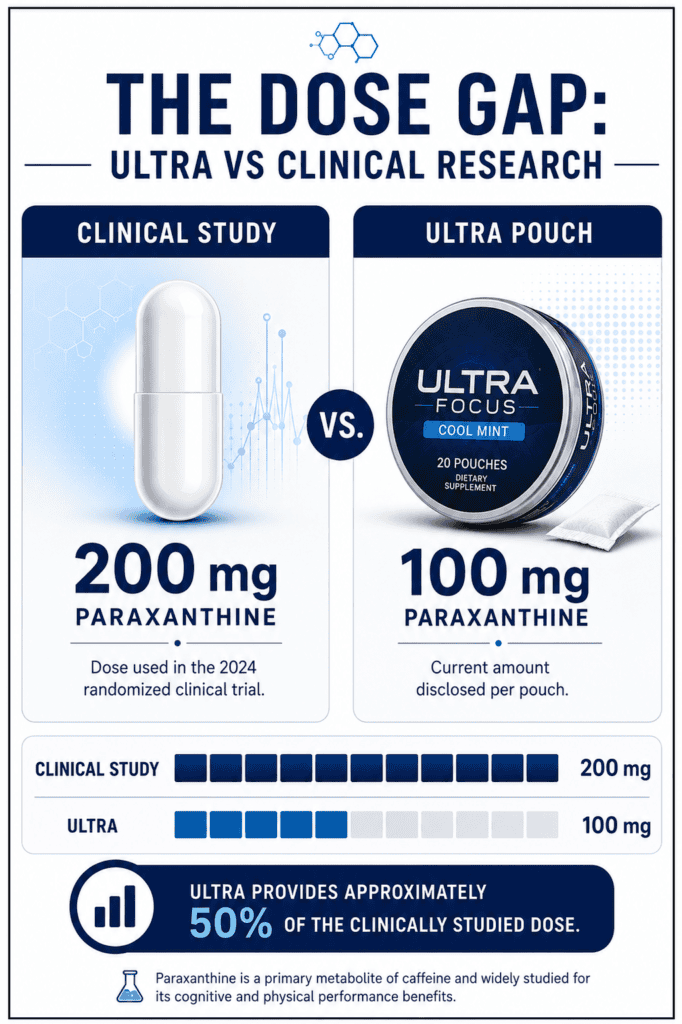
The headline research on paraxanthine, a 2024 randomized controlled trial in the Journal of the International Society of Sports Nutrition, used 200 mg of paraxanthine per serving to produce its benefits (Yoo et al., 2024). Ultra’s pouches contain 100 mg per pouch, confirmed from the brand’s published formula (raised from 75 mg in January 2026). That means one Ultra pouch delivers half the dose shown to work in the study its whole premise rests on, and the older formula delivered barely more than a third.
That does not make Ultra useless. Lower doses can still do something, a pouch is absorbed through the cheek rather than swallowed, and Ultra’s own instructions tell you to use one to two pouches at a time, which effectively acknowledges that a single pouch is a partial dose. But it does mean the confident “clinically studied” language around these products deserves an asterisk: the ingredient is studied at 200 mg, one pouch delivers 100 mg. If you are buying Ultra expecting the exact effect from the headlines, you are likely getting a lighter version of it from one pouch, or you need two to reach the studied dose.
Does the Paraxanthine Science Actually Hold Up?
Mostly yes, with one honest caveat. Paraxanthine is not a random new stimulant. It is the main compound your body turns caffeine into, which is why it produces similar alertness. The interesting part is that in studies it appears to deliver that alertness with fewer of caffeine’s downsides.
In the 2024 trial, trained runners who took 200 mg of paraxanthine showed improved cognitive accuracy (about a 6.8% gain in correct responses), reaction times roughly 23% faster than placebo, and fewer errors than the caffeine group, with “no evidence that PX ingestion adversely affected ratings of side effects… or clinical blood markers” (Yoo et al., Journal of the International Society of Sports Nutrition, 2024). Adding caffeine on top of paraxanthine gave no extra benefit. Follow-up work has reported similar memory and neuroplasticity effects (Jäger et al., 2024; PLOS ONE, 2025).
Now the caveat, and it matters: most of the paraxanthine research is funded by the company that sells the ingredient. In the 2024 study, several authors disclose that they are principals and investors in the sponsor and hold patents on paraxanthine. That does not make the findings wrong, but industry-funded research always warrants a more cautious read than independent research, and the marketing around these pouches never mentions it. Our position: the science is genuinely promising, and it is early and mostly sponsor-backed. Both things are true.
Ultra Pouches Review: What Real Users Say?
Beyond the lab, the everyday experience matters, so we looked at the verified customer reviews.
On the brand’s own review platform, Ultra holds a 4.89 out of 5 across 2,958 verified-buyer reviews, with 100% of reviewers saying they would recommend it (Junip). That is an unusually strong score. One honest caveat worth stating: these reviews are collected by the brand through Junip, and brand-collected reviews tend to skew more positive than fully independent ones, so read the number as “most buyers are happy,” not as a neutral audit.
Across those reviews and the independent write-ups, the recurring themes line up:
What people like: the focus feels clean and jitter-free, it kicks in reasonably fast (users commonly report noticing it within about 15 to 20 minutes), there is little or no crash afterward, and it is discreet and easy to use without a drink. The flavors are generally well received.
Common criticisms: heavy coffee and energy-drink users often describe the lift as subtle or mild rather than dramatic, some notice a slight lip or gum tingle, and several feel it is expensive for what it delivers. A few say they need two pouches to really feel it.
That last point is worth connecting back to the data. The “it feels subtle” reaction lines up neatly with the dose gap: if a single pouch carries half the studied paraxanthine dose, a mild effect for caffeine-hardened users is exactly what you would expect, and the “two pouches to feel it” reports fit the same math. It is a good example of the label and the lived experience telling the same story. Timing and placement matter too, which is why we put together a short guide on how to use Ultra Pouches to get the most out of each one.
Ultra Pouches Flavors
Ultra’s Focus line currently comes in five flavors: Blue Razz, Wintergreen, Cool Mint, Tropical, and Watermelon, plus variety packs. The brand also sells a separate Ultra Sleep pouch (Honey Lemon) built around 1 mg of melatonin rather than paraxanthine, so if you are shopping for energy and focus, make sure you are buying the Focus line, not Sleep. Because flavor is personal and we have not tasted every option first-hand, we will not rank them from imagination. What we can say from aggregated reviews is which flavors come up most often as favorites and which draw complaints, which we cover in our full Ultra Pouches flavors guide.
Are Ultra Pouches Safe? Side Effects and Who Should Avoid Them
Ultra contains no nicotine, so it avoids nicotine’s addiction and cardiovascular risks entirely, which is a real advantage over a nicotine pouch. But it is still a stimulant product, and paraxanthine is a close cousin of caffeine, so the sensible cautions are the same.
In the clinical trial, paraxanthine did not raise side-effect ratings or disturb blood markers, which is reassuring at the studied dose. Still, people who are sensitive to caffeine may feel similar effects, jitters, a raised heart rate, or trouble sleeping if used late in the day, especially if they stack Ultra on top of coffee or an energy drink. The groups who should be cautious or avoid it: anyone sensitive to stimulants, people with heart conditions or high blood pressure, anyone pregnant or breastfeeding, people on medications that interact with stimulants, and anyone under 18. As with any supplement, a quick check with a doctor is wise if you have a health condition. Our full Ultra Pouches safety guide goes deeper on side effects and the groups who should skip them.
This article is general information, not medical advice.
Price and Value
Ultra sits firmly at the premium end of the category. On its official store, it is $16 per can, and it is sold only in multi-packs: the smallest option is 3 cans for $48, then 6 cans for $96 or 9 cans for $144. There is no single-can option, so the real entry price is $48. At roughly 15 pouches per can (the category norm; Ultra does not state the count on its store), that works out to about $1.07 per pouch. If you want to compare stockists and current deals, see our guide on where to buy Ultra Pouches.
Here is where price and dose collide. Ultra’s own instructions say to use 1 to 2 pouches at a time, and since one pouch holds 100 mg of paraxanthine, it takes two to reach the 200 mg used in the research. So hitting the studied dose costs about $2.13 per serving and burns through a $16 can in roughly a week of daily use. Next to a coffee or a canned energy drink, that is expensive, and the brand’s own two-pouch guidance quietly confirms the single-pouch dose gap we flagged earlier.
The honest value verdict: you are paying a premium for a discreet format and a researched active ingredient, but the dose gap and the proprietary blend mean you cannot be fully sure you are getting the researched effect for the price of one pouch, and matching it doubles your cost. For some people the convenience is worth it; for others, a measured dose of standalone paraxanthine or a plain caffeine-plus-L-theanine option delivers more certainty for less money.
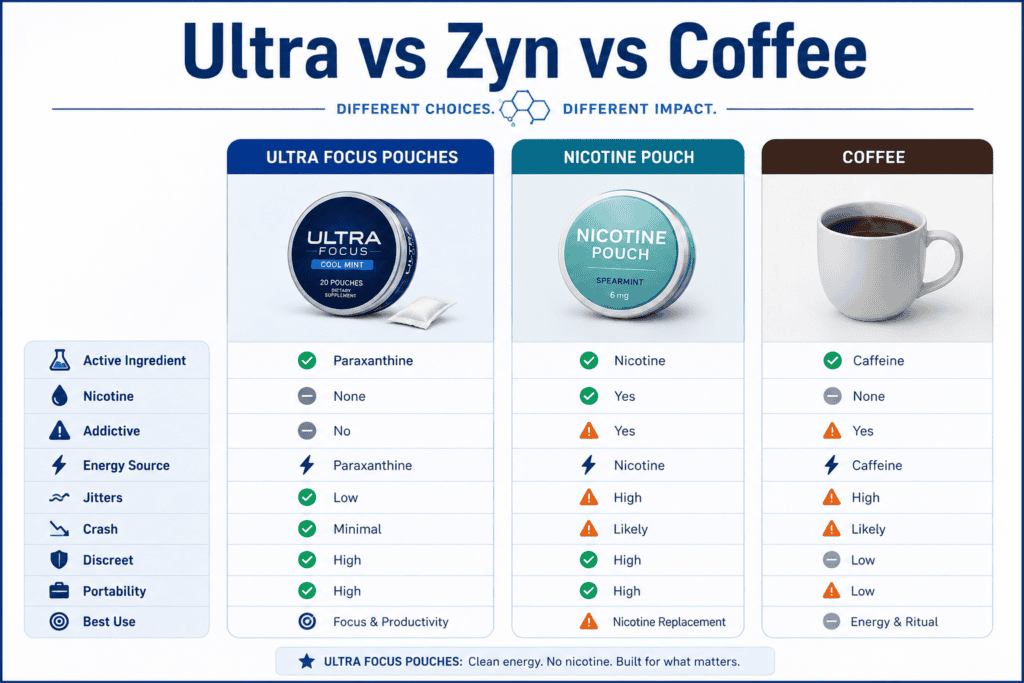
Ultra vs the Alternatives
| Ultra Pouches | Nicotine pouch (e.g. Zyn) | Coffee / energy drink | |
|---|---|---|---|
| Active | Paraxanthine (~100 mg) | Nicotine | Caffeine |
| Addictive? | No | Yes | Mildly |
| Format | Discreet pouch | Discreet pouch | Drink |
| Jitters/crash | Low (per studies) | n/a | Common |
| Main draw | Clean focus, no nicotine | Nicotine hit | Familiar, cheap |
| Main drawback | Under-dosed, premium price | Nicotine addiction | Crash, not discreet |
If your goal is focus without nicotine, Ultra is a reasonable pick. If you are actually chasing a nicotine product, an energy pouch is the wrong aisle, and our nicotine pouch guides are the better starting point. We break down that specific matchup in Ultra Pouches vs Zyn, and if you are weighing Ultra against your morning cup or a canned energy drink, see Ultra Pouches vs coffee and how it stacks up against other caffeine pouches.
Ultra is not the only energy pouch on the shelf, either. We put it head-to-head against its closest rivals in Ultra vs Alpha, Ultra vs Roon, and Ultra vs NZE pouches, so you can see where each one wins on dose, price, and formula transparency.
Pros and Cons
Pros
- Built on paraxanthine, one of the few focus-pouch ingredients with real peer-reviewed research
- Zero nicotine and zero tobacco, so no addiction risk
- Discreet, sugar-free, no drink required
- Studies suggest caffeine-like focus with fewer jitters and no crash
Cons
- Uses 100 mg of paraxanthine per pouch, about half the 200 mg used in the research
- The other five actives are hidden in an undisclosed proprietary blend
- Premium price per serving
- The supporting research is largely funded by the ingredient’s maker
Who Should Buy Ultra Pouches, and Who Should Skip Them
Ultra makes sense if you want a discreet, nicotine-free focus boost, you have tried and disliked the jitters of coffee or energy drinks, and you value convenience over squeezing out the maximum researched dose. It is a fair on-ramp to the category from a brand using a legitimate active ingredient.
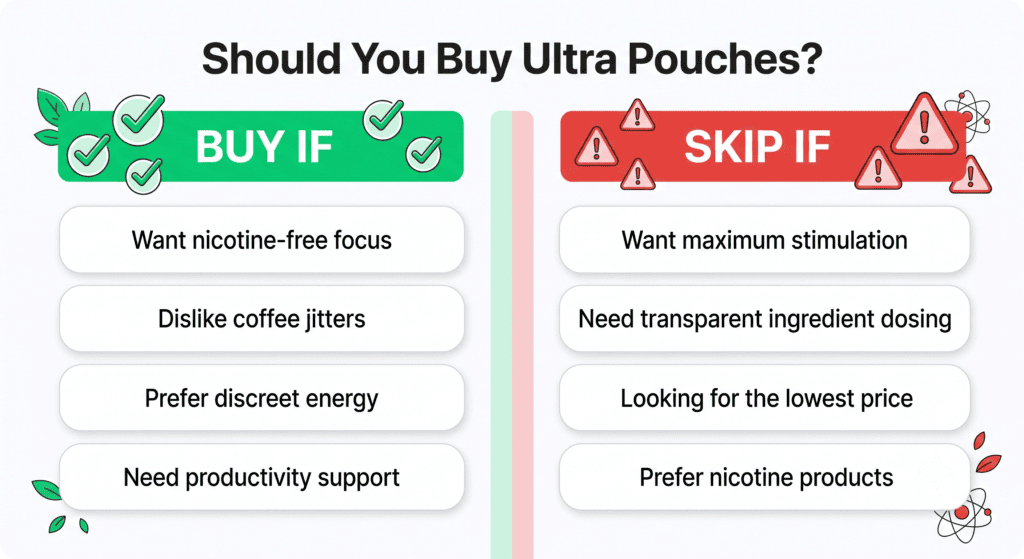
Skip it if you want proven, transparent dosing (the proprietary blend and apparent dose gap work against you), if you are highly price-sensitive, or if you are actually looking for a nicotine product. Stimulant-sensitive users should start with a fraction of a pouch or avoid it.
The Bottom Line
Ultra Pouches are one of the more credible options in a category full of hype, and that credit is earned by their active ingredient, not their marketing. Paraxanthine has real research showing caffeine-like focus with fewer side effects, which most “focus pouches” cannot claim. But an honest look at the label raises two flags competing reviews bury: Ultra appears to deliver about half the studied dose, and the rest of the formula is a proprietary blend you cannot verify. Add a premium price and industry-funded science, and Ultra lands as a promising, above-average product that is not quite the clinically-dosed powerhouse the category’s marketing implies. A solid 3.5 out of 5, and a genuinely better bet than the rival pouches quietly reviewing it in their own favor. (Our 3.5/5 is an evidence-and-value rating, based on the strength of the ingredient research, dosing transparency, and price per serving, not a taste or experience score, since we did not test the product first-hand.)
Frequently Asked Questions
Do Ultra Pouches contain nicotine?
No. Ultra Pouches are completely nicotine-free and tobacco-free. They use paraxanthine, a caffeine alternative, for energy and focus, so they carry none of nicotine’s addiction or cardiovascular risks.
What is paraxanthine, the main ingredient in Ultra?
Paraxanthine is the main compound your body converts caffeine into. It produces similar alertness, and in studies it appears to do so with fewer jitters and no rise in blood pressure. Ultra uses a branded form called enfinity.
Do Ultra Pouches actually work?
The active ingredient has real support: a 2024 randomized trial found 200 mg of paraxanthine improved reaction time and cognitive accuracy versus placebo. The caveat is that one Ultra pouch delivers 100 mg, about half that dose, and the research is largely funded by the ingredient’s maker, so expect a real but likely milder effect from a single pouch.
Are Ultra Pouches safe?
They contain no nicotine, which removes nicotine’s biggest risks. As a stimulant, though, they carry the usual caffeine-style cautions: people sensitive to stimulants, those with heart conditions, pregnant or breastfeeding people, and anyone under 18 should be careful or avoid them.
How much do Ultra Pouches cost?
Ultra costs $16 per can and is sold only in multi-packs, starting at 3 cans for $48 (6 for $96, 9 for $144). At roughly 15 pouches per can that is about $1.07 per pouch, and since the studied dose is two pouches, closer to $2.13 per effective serving, more than a coffee or an energy drink.
Are Ultra Pouches better than Zyn?
They are different products. Zyn is a nicotine pouch; Ultra is a nicotine-free energy pouch. If you want focus without nicotine, Ultra fits. If you want nicotine, Ultra is not what you are looking for.
Do Ultra Pouches cause a crash?
In the research, paraxanthine did not produce the crash associated with high-dose caffeine, and users generally report a smoother comedown. Individual results vary, especially for people sensitive to stimulants.

Alex is a vaping enthusiast with 6 years of hands-on experience across disposable vapes, pods, e-liquids, and flavors. He shares his reviews, insights, and practical tips on vaping with the PureVapeReviews community to help readers make better-informed choices.