Last updated: 23 July 2026
Medically reviewed by Dr. Aishwarya Negi, BDS — 23 July 2026
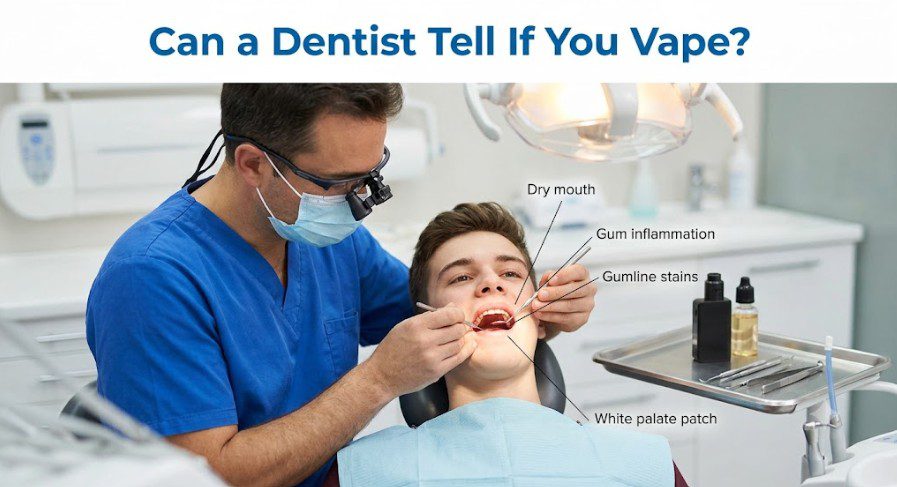
Usually, yes. A dentist can often tell when someone vapes. There is no breath test for it, and one puff will not show up on an X-ray. But vaping changes the mouth in ways a trained dentist knows how to read.
This guide by our team PureVapeReviews covers what a dentist really sees, how fast the signs show up, whether they can prove it, and who they tell. It also shows how to lower the harm if quitting is not on the table yet.
At a glance
| Question | Short Answer |
|---|---|
| Can a dentist tell if you vape? | Often, yes. They read the signs in your gums, teeth, and the roof of your mouth. |
| Can they prove it? | No. They spot patterns. Only you can confirm it. |
| How fast do signs show? | Dry mouth can start in weeks. Stains and gum changes take 3 to 12 months. |
| Will they tell your parents? | It depends on state law and your age. Sensitive topics are often handled with care, not a phone call home. |
| Biggest giveaway? | Dry mouth paired with gum swelling and staining near the gumline. |
| Is it worse than smoking? | Vaping stains less and shows lower gum-disease rates than cigarettes. It still causes dry mouth and decay, and it is not safe. |
Why Vaping Shows up in Your Mouth?
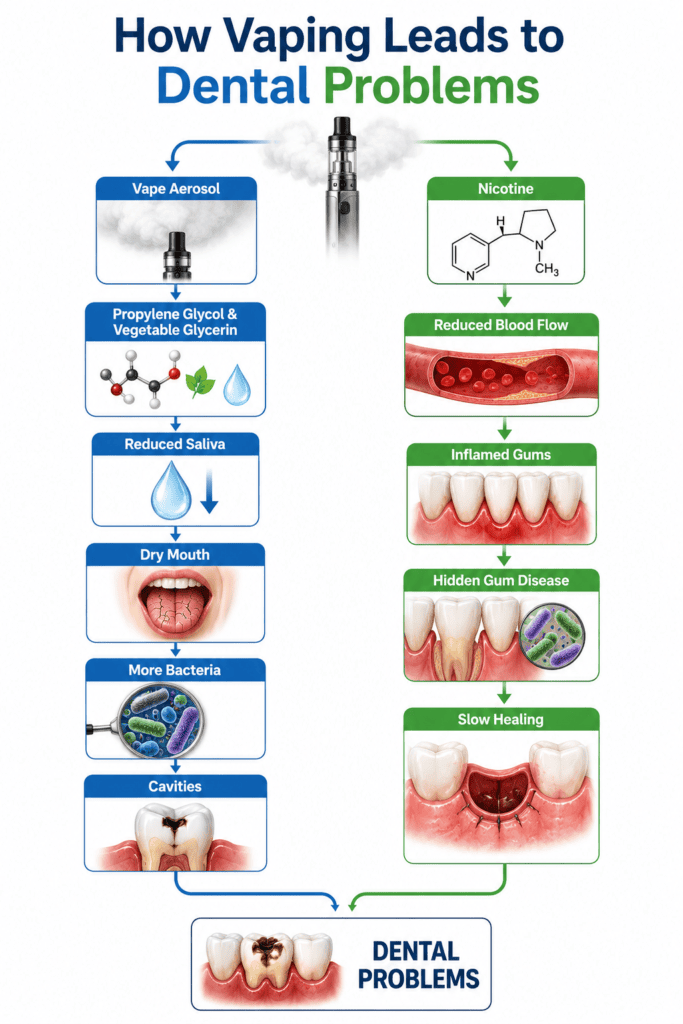
Vape aerosol is not just water vapor. It carries nicotine, propylene glycol, vegetable glycerin, and flavor chemicals. Each one touches the mouth in a way a dentist can notice.
Propylene glycol and glycerin pull in moisture. They dry out the mouth and cut down on saliva. Saliva has a bigger job than most people think. A steady flow rinses away food bits and keeps acid from wearing at the teeth. It also slows the germs that lead to decay. When the mouth runs dry, cavities and bad breath both climb.
Nicotine tightens the blood vessels in the gums and lowers blood flow (American Heart Association). Gums with poor blood flow bleed less, so gum disease can hide and grow worse without the usual warning of bleeding when brushing.
The sweet flavors feed the germs that cause cavities. Lab studies show vape liquid helps Streptococcus mutans, the main cavity germ, grow and stick to teeth (Frontiers in Oral Health, 2025). Heat and chemicals also irritate the soft tissue inside the mouth.
What Signs a Dentist Actually looks For?
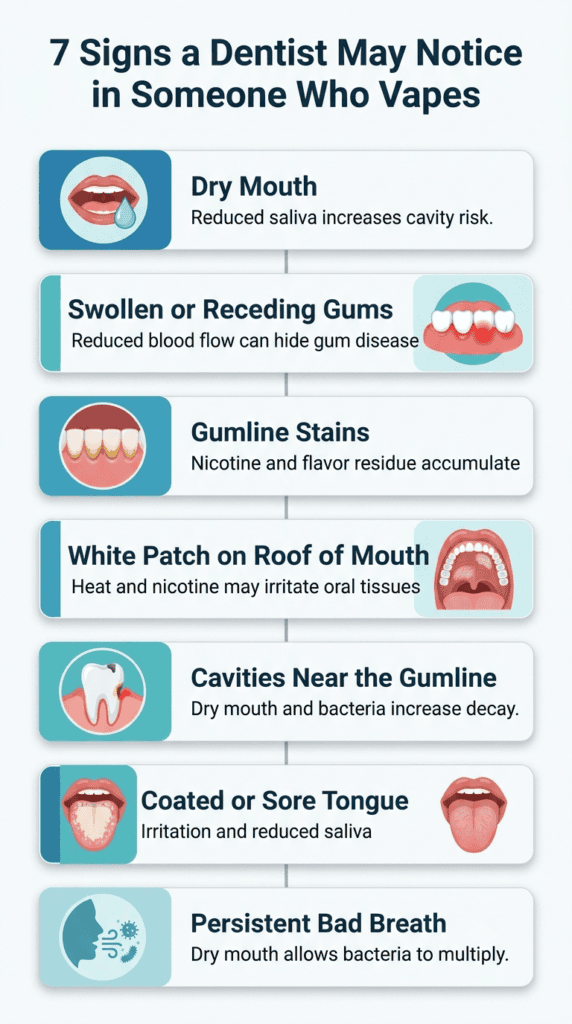
A dentist does not need a confession. The mouth tells the story. Here are the signs they check, what causes each one, and how soon it shows.
| Sign | What causes it | When it shows | What else it could mean |
|---|---|---|---|
| Dry mouth | Propylene glycol and glycerin pull moisture; nicotine cuts saliva | Within weeks | Mouth breathing, some medicines, other health issues |
| Red, puffy, or pulling-back gums | Nicotine lowers gum blood flow; harmful germs rise | 3 to 12 months | Brushing too hard, poor cleaning |
| Stains near the gumline | Nicotine and flavor residue | A few months | Coffee, tea, red wine |
| White patch on the roof of the mouth | Heat and nicotine irritate the palate | Months | Very hot drinks |
| Bad breath | Dry mouth and germ buildup | Weeks | Certain foods, other mouth problems |
| Cavities at the gumline | Sweet liquid feeds germs; dry mouth speeds decay | Months | Sugary diet, poor brushing |
| Slow healing after dental work | Nicotine lowers blood flow to tissue | After a procedure | Diabetes, some medicines |
| Coated or sore tongue | Dryness and irritation | Weeks | Dehydration, oral thrush |
A few of these deserve a closer look, because they are the ones a dentist trusts most.
Dry Mouth
Dry mouth is the fastest and most common sign. One large research review of nearly 6,900 people found dry mouth in 33% of vapers. That was higher than the 24% seen in cigarette smokers (Tobacco Induced Diseases, 2022). A dentist can see and feel a dry mouth right away. The tissue looks dull, the lips stick, and there is little pooled saliva.
Gum Trouble
Vapers show more gum damage than people who do not vape. One study measured gum attachment loss of 2.9 mm in vapers versus 2.2 mm in non-smokers, and the gap grew over time (PLOS Global Public Health). Vapers also had more of the harmful germs tied to gum disease, higher inflammation, and a weaker response to gum treatment. Data from the American Heart Association put gum disease and oral infections in 43% of vapers, next to 28% of people who neither smoked nor vaped.
Nicotine Stomatitis
This is a white or gray patch on the roof of the mouth, often with small red dots. Heat and nicotine cause it. Most people never notice it, but a dentist spots it fast during a normal exam. It is one of the clearer clues that heat and nicotine have been passing through the mouth.
Cavities At the Gumline
Vaping raises cavity risk in a way that shows up in the numbers. A Tufts University study of more than 13,000 dental patients found that 79.1% of vapers were high risk for cavities, compared with 59.6% of everyone else (PubMed, Irusa et al.). A newer review found untreated cavities about twice as common in vapers (Frontiers in Oral Health, 2025). The decay often sits near the gumline, where sweet residue settles.
What Each Sign Could Mean Besides Vaping?
Here is the honest part most articles skip. These signs point to vaping, but they rarely prove it on their own.
Dry mouth also comes from many common medicines, from breathing through the mouth at night, and from other health problems. Stains near the gumline can come from coffee, tea, or red wine. Gum swelling can come from brushing too hard or missing spots when cleaning. A white patch on the palate can come from very hot drinks.
A dentist reads the whole picture, not one sign alone. When dry mouth, gumline stains, gum swelling, and a palate patch all show up together in a younger patient with healthy habits, vaping moves to the top of the list. That mix is the real tell.
How Fast Can a Dentist Notice?
The timeline depends on how often someone vapes and how strong the liquid is.
Dry mouth can start within a few weeks of regular use. Bad breath follows the dry mouth. Stains and early gum changes usually take 3 to 12 months to build up enough to see. Cavities and deeper gum damage take longer, often a year or more. A single session, or the odd puff at a party, leaves no reliable mark.
Vaping vs Cigarettes: What Shows Up?
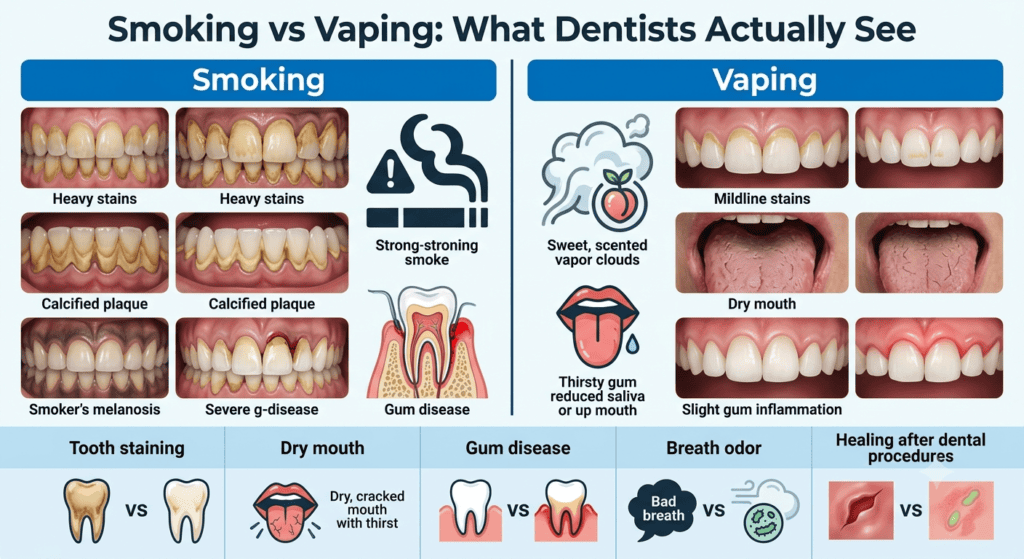
Both habits harm the mouth, but they leave different footprints. A dentist can often tell them apart.
| What a dentist checks | Cigarettes | Vaping |
|---|---|---|
| Staining | Heavy brown or yellow tar stains | Lighter stains, mostly near the gumline |
| Smell | Strong, stale tobacco odor | Faint or sweet, tied to the flavor |
| Gum disease rate | About 73% of smokers | About 43% of vapers |
| Bleeding gums | Often masked by nicotine | Also masked by nicotine |
| Dry mouth | Common | More common than with smoking |
Cigarettes leave the clearer marks because tar is dark and sticky. Vaping is quieter but still shows the dry mouth, gum swelling, and gumline stains a dentist knows to look for. Nicotine in both hides gum bleeding, so a dentist stays alert for gum damage even when the gums look calm.
Does the Type of Vape Change What a Dentist Sees?
Yes. What sits in the tank changes the picture.
| Vape type | What a dentist tends to see |
|---|---|
| Freebase nicotine (high strength) | Strong dry mouth, more gum swelling, more staining |
| Nicotine salts (nic salts) | High nicotine load; heavy dry mouth even in small devices |
| Nicotine-free | Still causes dry mouth and cavity risk from propylene glycol, glycerin, and sweet flavors |
| Sweet or dessert flavors | More cavity risk near the gumline from sugar-like residue |
| THC or weed pens | Dry mouth plus more irritation; higher risk of dry socket and slow healing after dental work |
The takeaway is simple. Zero nicotine does not mean zero signs. The base liquid and flavors still dry the mouth and feed decay germs.
Can a Dentist Prove You Vape, and Who do They Tell?
A dentist can spot the signs. They cannot prove vaping the way a lab test proves a fact. Dry mouth, stains, and gum swelling are strong clues, not proof. Only the patient can confirm it. This is why a dentist asks. An honest answer helps them protect the teeth and plan the right care.
The “will they tell your parents” fear is common, and the real answer depends on state law and age. Rules for treating minors and sharing their records are set by each state (American Dental Association). Parents or guardians usually give consent for a minor’s care, so they may have access to some records.
The ADA also points out that young patients often hold back on sensitive topics like drug use when a parent is in the room. Its guidance leans toward listening with care and helping the patient talk to their parents, rather than reporting on the spot. Many dentists treat vaping as a health habit to discuss, not a secret to expose. Adults have full privacy under normal patient rules.
Myths about hiding Vaping from Your Dentist
Plenty of tricks get passed around online. Most of them do not work.
| Myth | Reality |
|---|---|
| Brushing right before the visit hides it | Brushing cleans surface film. It does not undo dry mouth, gum swelling, or a palate patch. |
| Mouthwash covers the smell and the signs | It may mask odor for minutes. Alcohol mouthwash can dry the mouth even more. |
| Whitening strips erase the proof | Whitening lifts some stains. It does nothing for gum disease or decay. |
| Vaping once in a while is invisible | Light use leaves little mark, but the habit’s damage builds up over months. |
| Sweet flavors smell harmless, so they hide it | Sweet residue actually raises cavity risk, which a dentist can measure. |
What Are the Quick Ways to lower the harm if you still Vape?
Quitting removes the source of the harm. For anyone not ready yet, these steps lower the damage. None of them cancel the risk, but each one helps.
Keep water within reach and sip it through the day, and again right after vaping, to ease the dryness. Chewing sugar-free gum helps saliva keep flowing. Choose an alcohol-free mouthwash, since alcohol dries the mouth even more. Brush twice a day with fluoride toothpaste and floss once a day, with extra care at the gumline where decay starts. Ask a dentist about a stronger fluoride treatment. Go with plain or low-sweetness flavors when possible. Keep regular cleanings so problems get caught early.
When to see a Dentist Sooner?
Some signs mean it is time to book a visit now, not at the next checkup.
A sore or ulcer in the mouth that does not heal within two weeks needs a look. So do gums that keep pulling back, teeth that turn loose, or steady bad breath that will not clear. Sharp tooth sensitivity, a burning tongue, or a white or red patch that sticks around all deserve attention. Early care keeps small problems from turning into big ones.
Does Vaping Cause Oral Cancer?
The honest answer is that it is not proven either way. There is no solid proof that vaping causes oral cancer, and there is no proof that it is safe. Lab studies show vape aerosol can damage the DNA in mouth cells and cause stress in those cells. Vapor also carries known cancer-causing chemicals like formaldehyde. A 2024 research review weighed the studies and warned that vaping is far from safe for the mouth (PubMed review, 2024). The long-term data is still being gathered, since vaping is newer than smoking.
Frequently Asked Questions
How can a dentist tell you vape?
They read the mouth. Dry tissue, swollen or pulling gums, stains near the gumline, and a white patch on the roof of the mouth together point to vaping. No single sign proves it, but the mix is a strong clue.
Can a dentist see if you vape from an X-ray?
Not directly. An X-ray can show bone loss from gum disease, which vaping can speed up. It cannot show vaping itself. A single puff leaves nothing on a scan.
Can a dentist tell if you vaped only once or occasionally?
Usually not. The signs come from regular use over weeks and months. A one-time try or the odd puff leaves no reliable mark.
Can a dentist smell vape on your breath?
Sometimes. The smell is often faint or sweet, tied to the flavor, not the strong smell of cigarettes. Dry-mouth breath is a bigger giveaway than the vape smell itself.
Can a dentist tell the difference between smoking and vaping?
Often yes. Cigarettes leave dark tar stains and a stale smell. Vaping leaves lighter gumline stains, a faint sweet note, and heavier dry mouth. The staining pattern is the clearest split.
Can a dentist tell if you vape weed or THC instead of nicotine?
The general signs overlap, like dry mouth and irritation. Cannabis use adds its own clues, such as more dry socket and slower healing after dental work. A dentist may suspect it but cannot name the exact substance from the mouth alone.
Will a dentist tell your parents if you vape?
It depends on state law and your age. Parents often consent for a minor’s care and may see some records. Still, the ADA guides dentists to handle sensitive topics like drug use with care and to help the patient talk to their parents, rather than reporting it on the spot. Adults have full privacy.
Is vaping better for your teeth than smoking?
It is less harsh in some ways. Vaping stains less and shows lower gum-disease rates than cigarettes. It also causes more dry mouth and still raises decay and gum risk. Less harmful than smoking is not the same as safe.
Can a dentist prove you vape?
No. A dentist reads patterns, not proof. The signs strongly suggest vaping, but only the patient can confirm it. That is why an honest answer helps your care.
Do whitening treatments remove vape stains?
Surface stains from vaping often lift with professional whitening. Whitening does nothing for the deeper problems, like gum disease or cavities near the gumline. It hides the color, not the damage.
Does nicotine-free vaping still show up at the dentist?
Yes. Propylene glycol, glycerin, and sweet flavors still dry the mouth and feed cavity germs, even with zero nicotine. A dentist can still see dry tissue and rising decay risk.

Dr. Aishwarya Negi is a practicing dentist based in Dehradun, India, and a clinician at Dental Peace Clinic. She writes and reviews PureVapeReviews content on how vaping and nicotine affect health, covering the mouth and throat as well as wider effects on the body.