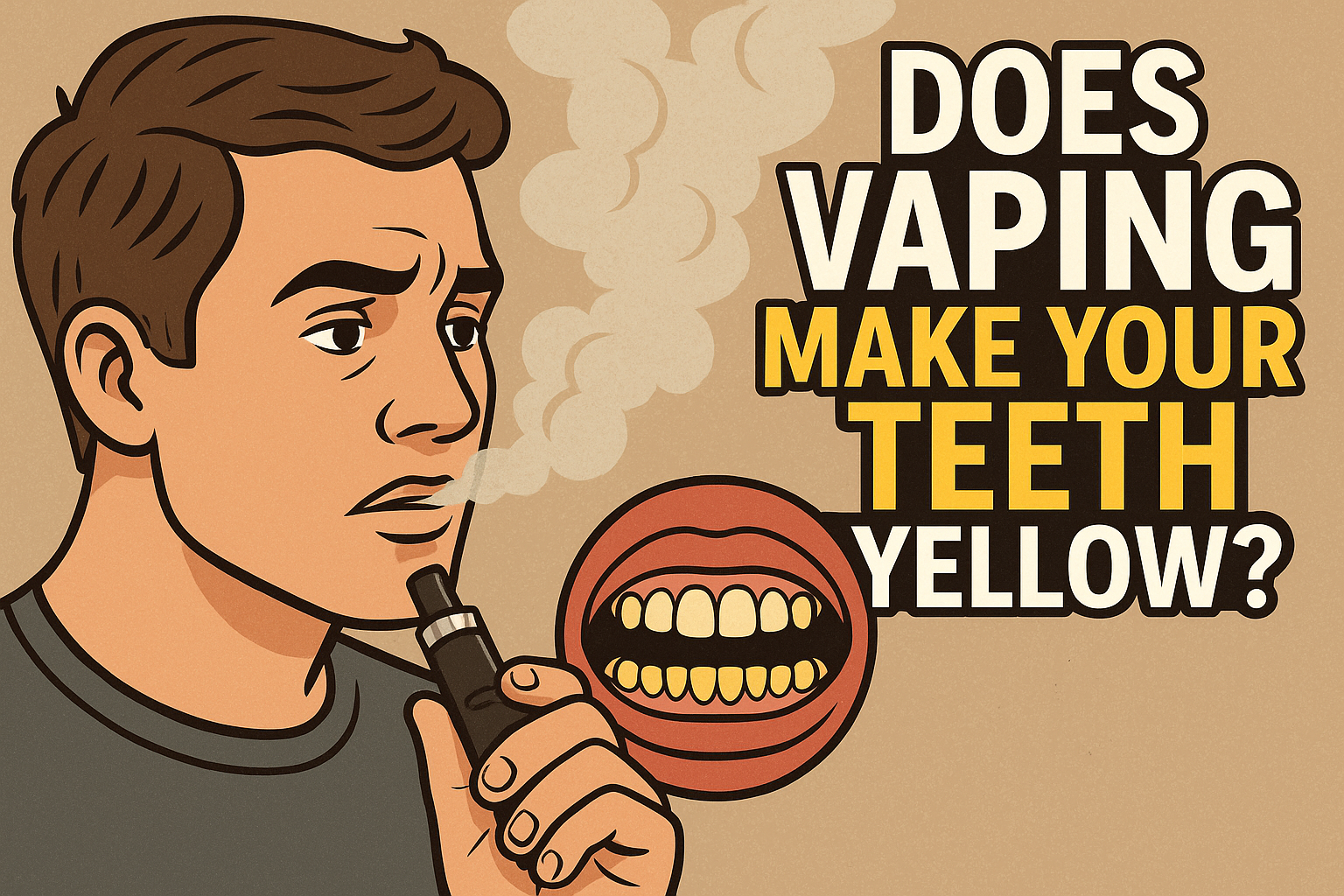
Short answer: usually, yes. There is no breath test for vaping, and a single puff won’t show up on an X-ray. But vaping changes your mouth in a handful of specific ways, and those changes are exactly what a dentist or hygienist is trained to read. After enough cleanings, the pattern becomes easy to spot.
Here is what gives it away, how quickly it shows up, and what you can do about it.
At a glance
| Question | Answer |
|---|---|
| Can a dentist tell? | Often, yes — from the combination of signs, not one clue alone |
| Can they prove it? | No. They can strongly suspect and ask you directly |
| How fast do signs appear? | Dry mouth and breath changes in weeks; staining and gum changes over months |
| Will they tell your parents? | Generally no, due to patient confidentiality (with rare safety exceptions) |
| Biggest single tell | Persistent dry mouth combined with gum inflammation |
Why vaping leaves a mark in the first place
Most of what a dentist notices traces back to two things: nicotine and reduced saliva.
Nicotine is a vasoconstrictor, which means it narrows blood vessels and cuts blood flow to your gums. Less blood flow means gums that look paler, heal slower, and can hide the bleeding that normally warns you about gum disease. At the same time, the base ingredients in most e-liquids (propylene glycol and vegetable glycerin) pull moisture from the mouth, so saliva drops.
That second part matters more than people expect. Saliva isn’t just water — it rinses away food, neutralises acid, and keeps the mouth near a neutral pH. When it runs low, bacteria and acid linger, and the risk of cavities and gum problems climbs. A dry mouth is the thread that ties almost every other sign on this list together.
A quick sense of scale: the CDC’s 2024 National Youth Tobacco Survey estimated that about 1.6 million U.S. middle and high school students currently use e-cigarettes — a lot of mouths, and a lot of dentists who now look for this.
The signs a dentist actually looks for
Vaping doesn’t leave the heavy tar stains of cigarettes, so dentists watch for a different cluster of clues.
| Sign | What’s behind it | How soon it can show |
|---|---|---|
| Dry mouth (xerostomia) | PG/VG and nicotine reduce saliva | Weeks |
| Gum inflammation or recession | Nicotine restricts blood flow to gum tissue | 1–3 months |
| Staining near the gumline | Nicotine yellows on contact with air | A few months |
| Bad breath | Dry mouth lets odour-causing bacteria build up | Weeks |
| Mouth or tongue irritation | Heat and chemicals irritate soft tissue | Variable |
| Faster cavities and plaque | Dry mouth plus sweet flavourings feed bacteria | 3–12 months |
A few of these deserve a closer look. Dry mouth is often the first thing a hygienist notices, because it’s visible and it speeds up everything else. Gum changes are the most useful tell: because nicotine masks bleeding, a dentist who sees inflamed gums that aren’t bleeding the way they should will often suspect nicotine use. Staining from vaping tends to be lighter than cigarette staining and sits near the gumline where a toothbrush misses — if you’ve noticed your teeth looking duller, our guide on whether vaping yellows your teeth goes deeper.
One honest caveat: none of these signs are unique to vaping. Dry mouth can come from medication or dehydration, and gum problems have many causes. What points a dentist toward vaping is the combination showing up together in someone whose teeth are otherwise cared for.
How fast can a dentist notice?
You don’t need years of vaping for changes to appear.
- First few weeks: dry mouth and a change in breath are usually the earliest signs.
- Three to twelve months: gum inflammation, early plaque buildup, and the first staining become visible.
- A year and beyond: gum recession, deeper staining, and a higher cavity rate are harder to miss.
Because most people see a dentist every six months, even modest changes tend to surface between visits.
Vaping vs cigarettes: what shows up in the mouth
People often assume vaping hides better than smoking. It hides differently.
| What a dentist sees | Cigarette smoking | Vaping |
|---|---|---|
| Staining | Heavy brown tar stains | Lighter, near the gumline |
| Smell | Strong tobacco odour | Faint sweet or chemical scent |
| Gums | Inflamed, bleeding often masked | Inflamed, bleeding masked by nicotine |
| Dry mouth | Common | Common, sometimes more pronounced |
| Tell-tale clue | Tar and odour | Dryness plus sweet-scented breath |
Neither is “safe” for your mouth. Both deliver nicotine, and nicotine is the common driver of the gum changes a dentist picks up on.
Does the type of vape change what a dentist sees?
Yes. The device and the e-liquid shift which signs show up most.
| Type of vape | Main effect on the mouth | What stands out to a dentist |
|---|---|---|
| Nicotine (freebase or salt) | Staining, dry mouth, restricted gum blood flow | Yellowing, receding gums, slow healing |
| Nicotine-free | Still dries tissue, irritates gums | Dryness and irritation without staining |
| Sweet or dessert flavours | Sugars and sweeteners feed bacteria | Cavities between teeth, sticky plaque |
| Cannabis/THC | Strong dry mouth, microbiome changes | Very dry tongue and gums, distinct odour |
| High-strength nic salts (5% / 50 mg/mL) | Faster staining, stronger gum effects | Earlier gum disease, poor healing |
A dentist won’t usually know the exact brand in your pocket, but the pattern of damage hints at what you’re using.
Can a dentist prove you vape — and will they tell anyone?
No, a dentist can’t prove it. The signs overlap with other causes, so the most they can do is recognise the pattern and ask. They’re not asking to judge you. Knowing helps them screen more carefully for early gum disease and oral cancer, and recommend the right care.
On the question younger vapers ask most: will the dentist tell your parents? Generally, no. Dentists are bound by patient confidentiality, and routine habits like vaping usually aren’t disclosed. Rules vary by region and by age, and there are narrow exceptions if there’s a serious safety concern, so the honest answer is “usually not, but ask your dentist about their policy.” Being upfront tends to get you better care, not a lecture.
Myths about hiding it from your dentist
| Myth | Reality |
|---|---|
| “Brushing right before the visit hides it.” | Brushing clears surface residue, not dry tissue, gum inflammation, or deeper staining. |
| “Mouthwash covers it up.” | It masks odour briefly. Alcohol rinses can worsen dryness, which is its own clue. |
| “Whitening strips erase the signs.” | They lighten surface stains but do nothing for irritated gums or recession. |
| “They can’t smell vape like cigarettes.” | The sweet or chemical scent often lingers, especially paired with dry mouth. |
| “Occasional vaping won’t show.” | Even light use can dry the mouth and start mild staining over time. |
How to limit the damage if you vape
You can’t make vaping good for your mouth, but you can blunt the worst of it:
- Drink water often and consider sugar-free gum or a dry-mouth rinse to keep saliva up.
- Use an alcohol-free, fluoride mouthwash so you aren’t adding to the dryness.
- Brush twice daily and floss once, paying attention to the gumline where staining and plaque collect.
- Favour lower-sweetness e-liquids if cavities are a concern — the sugars in dessert flavours feed decay-causing bacteria.
- Keep your six-month cleanings, or go more often if your dentist suggests it.
- The most effective step, of course, is cutting back or quitting nicotine.
When to see a dentist sooner
Book an appointment rather than waiting for your next checkup if you notice persistent bad breath that brushing won’t fix, gums that are receding or sore, white patches or sores that don’t heal within two weeks, or teeth that have become noticeably sensitive. Early gum disease and oral lesions are far easier to treat when caught early.
Frequently asked questions
Can a dentist tell if you vaped once?
Almost certainly not. A single use won’t leave lasting marks. Regular vaping is what builds the recognisable pattern.
Can a dentist smell vape on your breath?
Often, yes — the sweet or chemical scent can linger, and combined with dry mouth it’s noticeable during an exam.
Can a dentist tell the difference between smoking and vaping?
Frequently. Cigarettes leave heavier tar staining and a stronger smell; vaping leans toward dryness, lighter staining, and a sweeter scent. They may ask to confirm.
Is vaping less harmful to your teeth than smoking?
It avoids tar, so the deep staining and some cancer risk are lower. But it still causes dry mouth, gum irritation, and cavities, so “less harmful” is not the same as “harmless.”
Do whitening treatments remove vape stains?
They help with surface stains, but stains return if you keep vaping, and whitening does nothing for gum damage.
Sources
- Centers for Disease Control and Prevention — E-cigarettes and youth tobacco use: cdc.gov
- American Dental Association — Vaping and oral health: ada.org
- Cleveland Clinic — Gum (periodontal) disease: my.clevelandclinic.org
- Mayo Clinic — Oral thrush: mayoclinic.org
This article is for general information and is not a substitute for an in-person dental exam.

Alex is a vaping enthusiast with 6 years of hands-on experience across disposable vapes, pods, e-liquids, and flavors. He shares his reviews, insights, and practical tips on vaping with the PureVapeReviews community to help readers make better-informed choices.