Medically reviewed by Dr. Aishwarya Negi, BDS · July 25, 2026
Wait at least 48 to 72 hours before vaping after a root canal. A week is safer. Most pages say this is about dry socket, but that is wrong for a root canal. A root canal keeps your tooth, so there is no open socket to worry about. The real risks are slower healing, a loosened temporary filling, and the tooth getting infected again.
This guide gives a clear timeline, explains the true risks, and shows what to do if you already vaped.
Quick Answers
| Question | Short answer |
|---|---|
| Minimum wait | 48 to 72 hours with no vaping |
| Safer wait | About a week, until the tooth settles |
| Main risk | Slow healing, a loosened temporary filling, and reinfection |
| Is dry socket the danger? | No. A root canal keeps the tooth, so there is no socket to dry out |
| Does nicotine-free still count? | Yes. Heat, suction, and dry mouth still slow healing |
| Safer way to handle cravings | Nicotine patches, after asking your dentist |
How a Root Canal is Different from an Extraction?
A root canal is not the same as pulling a tooth, and that changes the risks.
When a tooth is pulled, it leaves an open socket with a blood clot inside. Vaping can suck that clot out and cause dry socket. A root canal is different. The dentist cleans the infected pulp out of the inside of the tooth, then seals the canal and caps it with a filling. The tooth stays in place. There is no socket and no clot to lose.
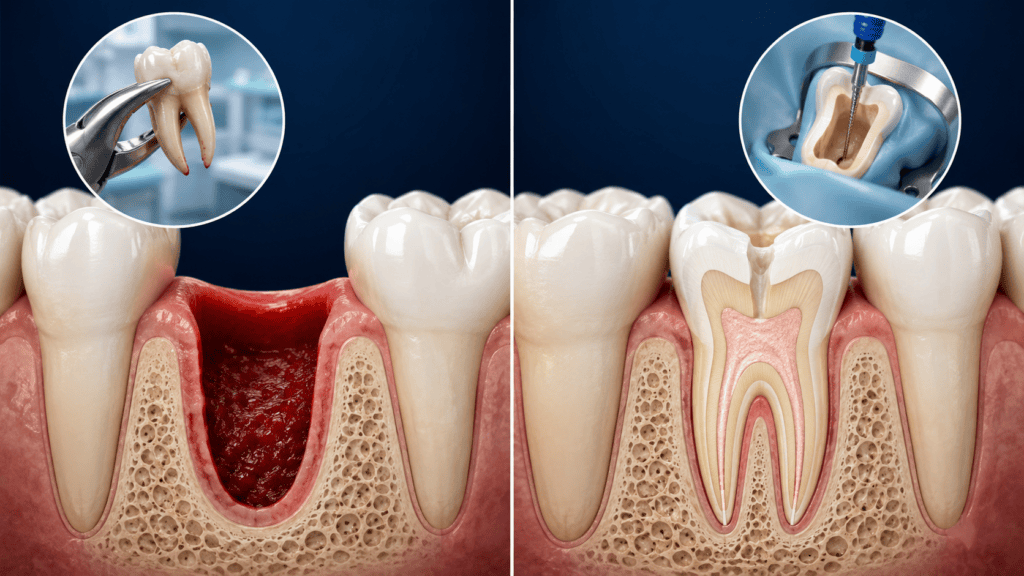
So the main danger after a root canal is not dry socket. It is slower healing of the tissue around the root tip, along with the risk of knocking the temporary filling loose. If a tooth was pulled instead, see the guide on how long after wisdom teeth removal you can vape.
Is There Any Safe Timeline for Vaping?
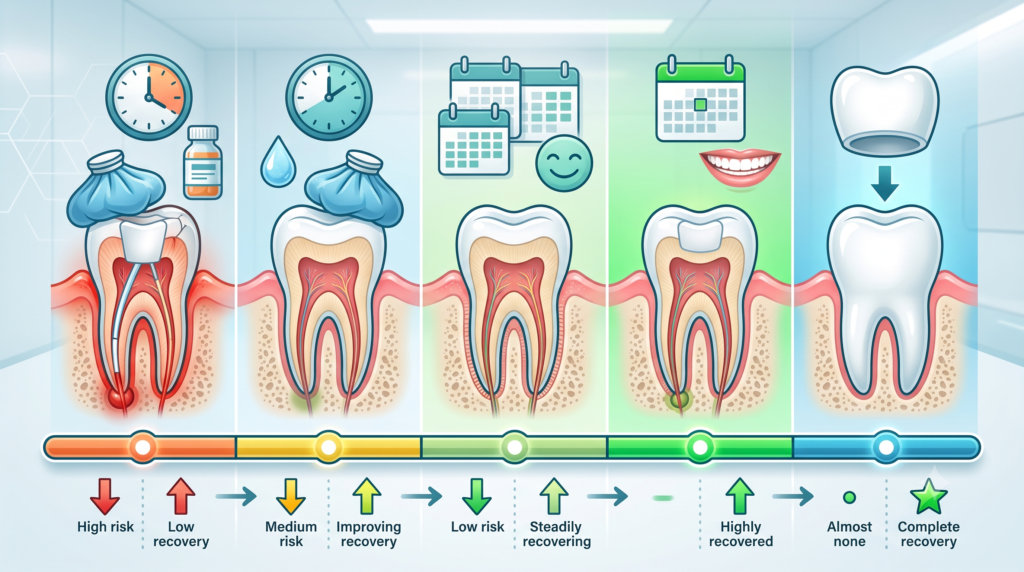
Healing runs in stages. The tooth is most sensitive right after the procedure and settles over the following days.
| Time after root canal | What is happening | Is vaping safe? |
|---|---|---|
| First 48 hours | The area is tender and the temporary filling is setting. | No. Wait. |
| 48 to 72 hours | Swelling starts to ease, but the tooth is still sensitive. | Still risky. Wait if you can. |
| 3 to 7 days | Soreness fades for most people. | Safer, but keep it gentle. Ask your dentist. |
| 1 week and beyond | The tissue around the root keeps healing for weeks. | Lower risk once the pain is gone. |
| After the permanent crown | The tooth is sealed and capped for good. | Normal oral-health rules apply. |
How does Vaping slows Root Canal Healing?
Vaping works against healing in more than one way.
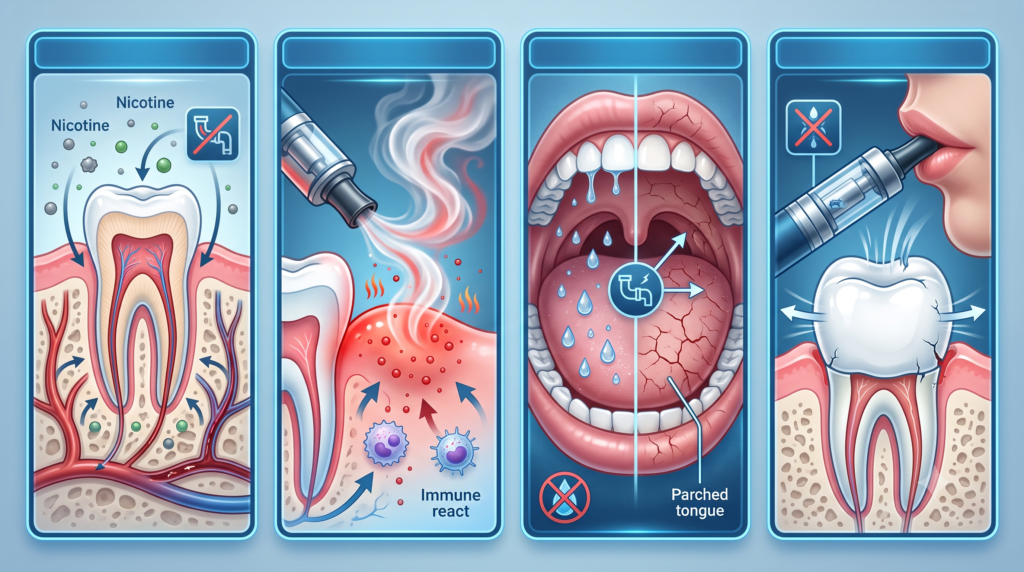
Nicotine tightens blood vessels and cuts blood flow. The tissue around the root tip needs that blood to heal, so less flow means slower repair. Vaping also dries out the mouth. Less saliva lets bacteria grow, which raises the chance of infection. On top of that, the heat and chemicals in the vapor irritate the tender tooth and gum. Vaping is also tied to other oral effects that outlast the healing window, such as stained, yellowing teeth.
How Temporary Filling can lead towards Problems?
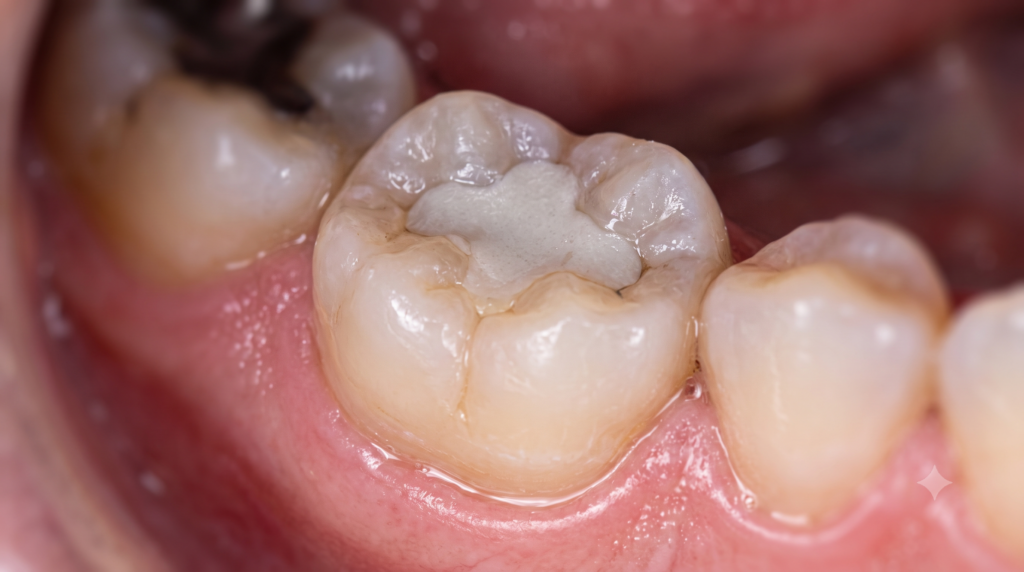
Most root canals get a temporary filling first. The permanent crown comes at a later visit, sometimes days or weeks away. That temporary filling is softer and weaker than a crown.
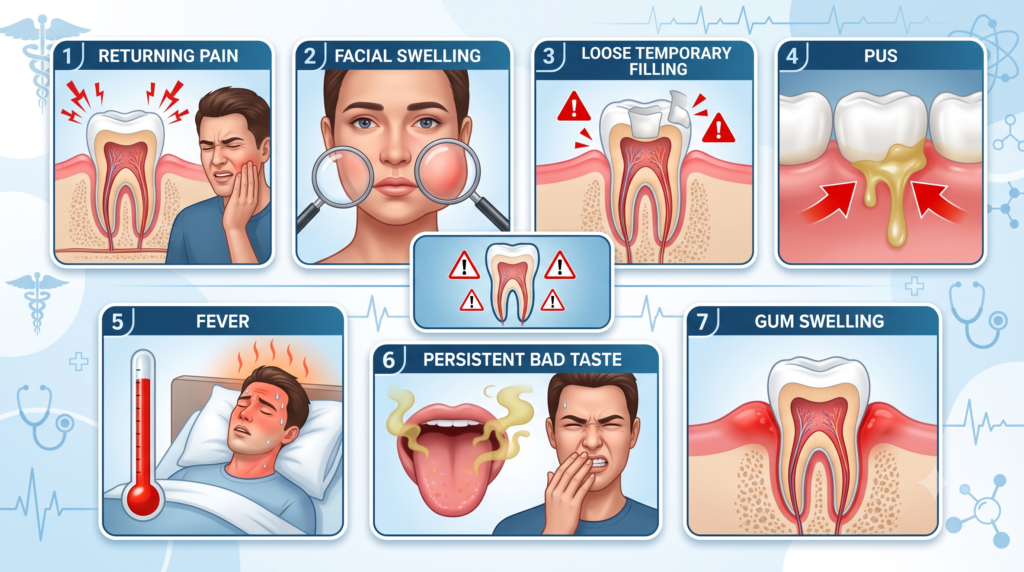
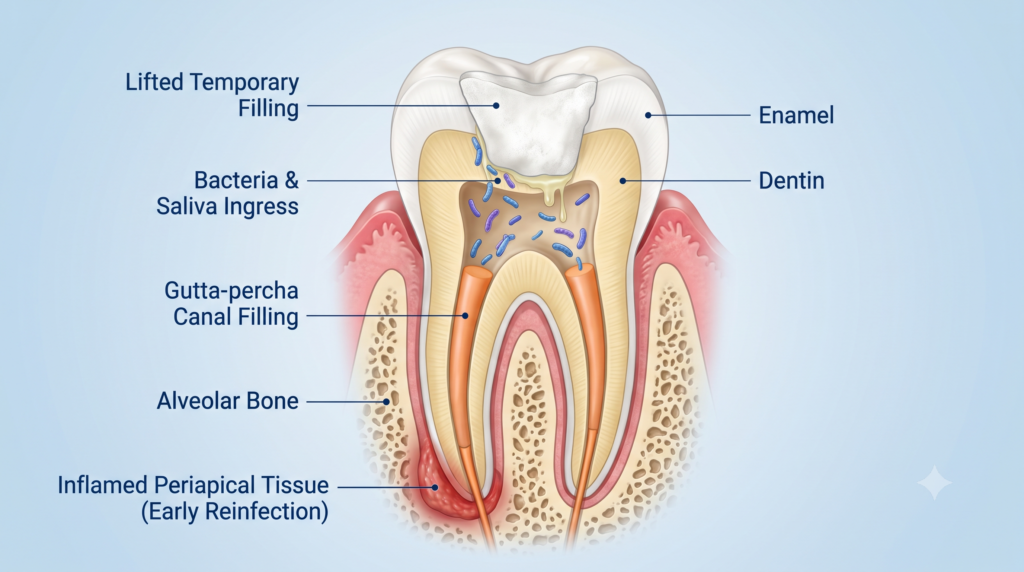
The suction from a vape, plus chewing on that side, can loosen or crack the temporary filling. If it comes loose, bacteria and saliva can seep back into the cleaned canal. That can undo the work and let the tooth get infected again.
Take extra care with vaping through this whole window, not only the first few days. Wait until the permanent crown is on before going back to normal habits. Once the crown is set, the tooth is sealed and the usual oral-health rules apply.
Does Vaping raise the Risk of Root Canal Failure?
Nicotine does more than slow comfort. The research ties it to worse root canal outcomes from both ends: nicotine is linked to needing a root canal in the first place, and to the tooth healing less well afterward.
Start with the odds of ever needing one. A 30-year study of 811 men and nearly 19,000 teeth found that smokers were about 70 percent more likely to need root canal treatment than non-smokers. The risk climbed the longer a person smoked, and it dropped back to a never-smoker’s level about nine years after quitting (Krall et al., Journal of Dental Research). A 2020 meta-analysis of 15 studies put the effect even higher, finding that smokers had roughly two and a half times the odds of the root-tip infection or of needing a root canal in the first place (Pinto et al., International Endodontic Journal).
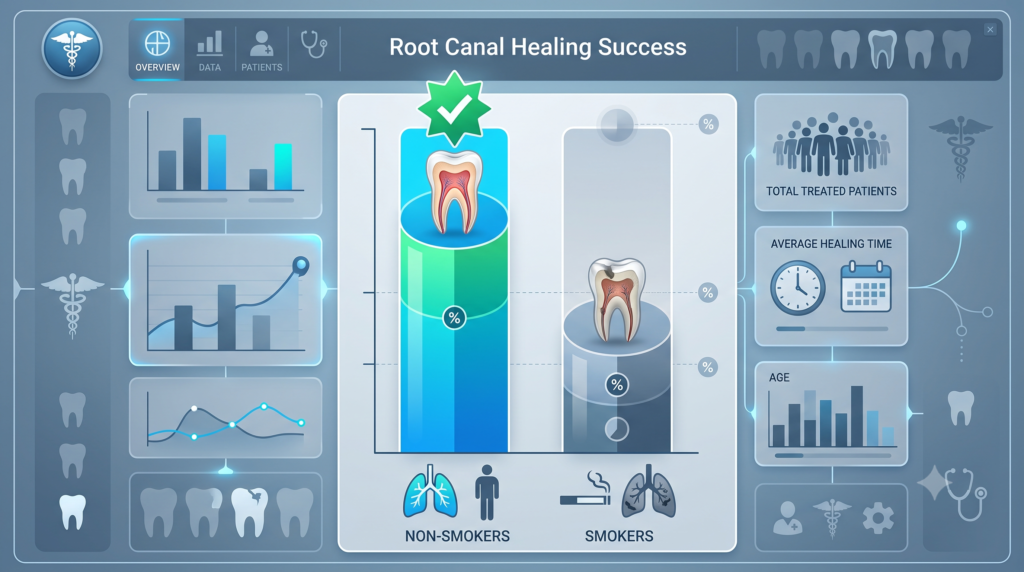
Then there is healing after treatment. A 2023 study found the tissue at the root tip healed in about 90.9 percent of non-smokers but only 58.2 percent of smokers (Paljević 2023, via NIH). A separate meta-analysis of 9,257 root-filled teeth found that smokers had higher odds of a lingering lesion at the root tip and concluded that smoking is a negative prognostic factor for the outcome of root canal treatment (Cabanillas-Balsera et al., 2020).
These studies looked at smoking, not vaping. But vaping delivers the same nicotine that narrows blood vessels, so the concern carries over. Long-term vaping data is still thin, which is one more reason to play it safe.
What the Research says about Nicotine, Vaping, and Root Canals
Most pages on this topic cite little or no research. Here is a plain-language roundup of what the studies actually show, including newer work on vaping itself.
| Study | Year | What it looked at | What it found |
|---|---|---|---|
| Krall et al., Journal of Dental Research | 2006 | 811 men and 18,893 teeth tracked over 30 years | Smokers were about 70% more likely to need a root canal; risk rose with years smoked and returned to normal about 9 years after quitting |
| Paljević et al. | 2023 | Healing of the tissue at the root tip after treatment | Healed in 90.9% of non-smokers versus 58.2% of smokers |
| Cabanillas-Balsera et al., J Clin Med | 2020 | Meta-analysis of 9,257 root-filled teeth | Smokers had higher odds of a lingering root-tip lesion (odds ratio 1.16); smoking is a negative prognostic factor for root canal outcome |
| Pinto et al., International Endodontic Journal | 2020 | Meta-analysis of 15 studies on smoking, root-tip infection, and root canal need | Smokers had about 2.4 times the odds of the root-tip infection or of needing a root canal |
| Tattar, Jackson and Holliday, Evidence-Based Dentistry | 2025 | Systematic review of 40 studies on vaping and gum health | Vapers had more plaque and inflammation than non-users; nicotine’s vessel-narrowing can hide gum bleeding, so problems get missed |
Two things stand out. First, the evidence points the same way from both directions: nicotine is tied to needing a root canal and to poorer healing after one. Second, that 2025 review of vaping and gum health flagged something easy to miss. Vapers tend to have more plaque and inflammation than non-users, yet they often bleed less when the gums are checked, because nicotine narrows the blood vessels (Tattar, Jackson and Holliday, Evidence-Based Dentistry). That matters after a root canal, because less bleeding can make a mouth look like it is healing well when it is not. A vaper may feel fine and see no blood while the tissue around the treated tooth is quietly repairing more slowly.
Beyond the Tooth: The Whole-Body Angle
Here is the part almost no guide on this topic mentions. The infection a root canal treats, called apical periodontitis, is not only a tooth problem. It is a pocket of chronic inflammation, and a growing body of research is looking at how it interacts with the rest of the body, especially in people who smoke or vape.
A 2025 study is the clearest example. In an animal model, smoke exposure made the root-tip lesions larger, and the infection and the smoke together, not either one on its own, raised oxidative stress and caused visible damage in lung tissue (Ferraz et al., Scientific Reports). A broader review of e-cigarette aerosol reached a similar theme, that vaping affects oral and whole-body health, not just the mouth (Almeida-da-Silva et al., Biomed J).
Two honest limits are worth stating plainly. That lung study used animals and cigarette smoke, not human vapers, and a 2025 review of the gum research found that vaping appears to affect periodontal health less than smoking does, though it is still understudied (Aldalaeen et al., Health Science Reports). So this is an emerging picture, not a settled one. The direction of the evidence is consistent, though: nicotine and inhaled aerosol work against healing, and the infection a root canal is meant to clear may carry costs past the tooth. That is one more reason to give the treatment the clean, smoke-free window it needs to work.
Can You get Dry Socket after a Root Canal?
Almost never. Dry socket needs an open socket, the kind left behind when a tooth is pulled. A root canal keeps the tooth in place, so there is no socket to lose a clot from. Some pages warn about dry socket after a root canal, but that mixes it up with tooth extraction. The one exception is if the tooth was pulled at the same visit. Then the socket rules apply.
What happens if you vape too soon?
Vaping in the first days can slow healing and stretch out the soreness. The bigger problem is the temporary filling. Suction can loosen it and let bacteria back in, which can reinfect the cleaned tooth. A reinfected tooth may need the whole root canal redone, or it may have to come out.
What to do if you already vaped?
One puff will not always ruin a root canal, so try not to panic. Stop vaping now and protect the tooth.
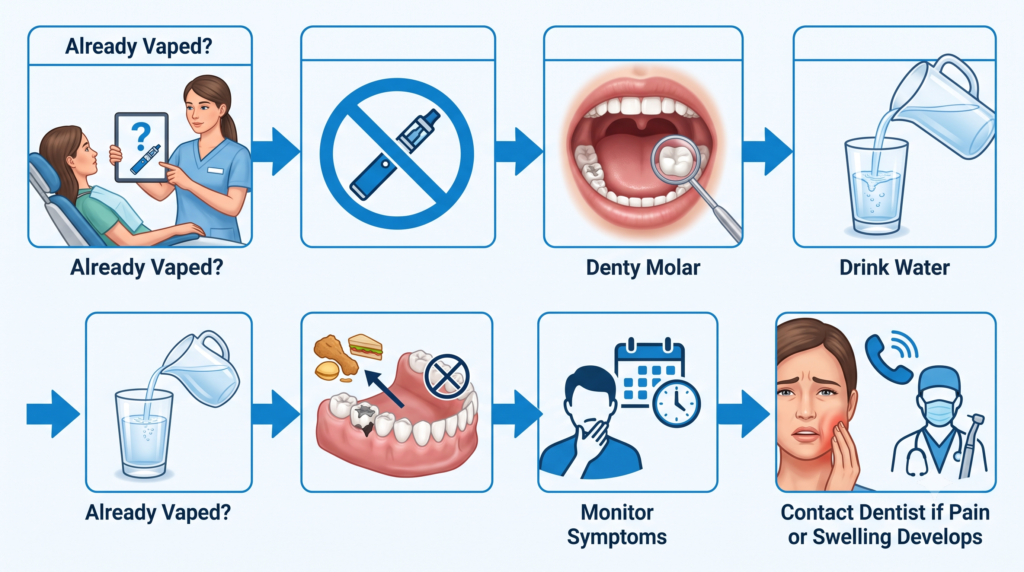
Check that the temporary filling still feels normal and level with your bite. Do not chew on that side. Sip water to fight dry mouth, and rinse gently with warm salt water if your dentist said that is okay. Over the next few days, watch for pain that comes back, swelling, a bad taste, or a filling that feels loose or falls out. Call your dentist if any of those show up.
Vaping vs Smoking vs Nicotine-free vs Patches
Suction, heat, and nicotine are what hurt healing, so products with fewer of those are safer during recovery. Nicotine pouches such as Zyn sit lower on the scale because they skip the suction and heat, though the nicotine still slows healing a little.
| Product | Risk after a root canal | Why |
|---|---|---|
| Vaping (with nicotine) | High | Nicotine slows healing, plus heat, suction, and dry mouth |
| Vaping (nicotine-free) | Medium to high | No nicotine, but heat, suction, and dry mouth still slow healing |
| Cigarettes | High | Nicotine plus smoke and more toxins |
| Nicotine pouches | Medium | No suction or heat, but nicotine still slows healing |
| Nicotine gum | Medium | Same as pouches, and chewing near the tooth is a risk |
| Nicotine patches | Lower | No suction, heat, or dry mouth; nicotine still slows healing a little |
Can you vape weed or THC after a root canal?
The same wait applies. Hold off at least 48 to 72 hours, and longer if you can. A THC vape or a dry-herb device still uses suction and heat, which can loosen the temporary filling and irritate the tooth.
Cannabis also causes strong dry mouth. That matters more after a root canal, because saliva helps guard the temporary filling and wash away bacteria. Less saliva means more risk of reinfection. Anyone who uses cannabis for medical reasons should ask about an edible or another form that skips inhaling during recovery.
How to lower the risk if you cannot wait
Waiting is the only truly safe choice. These steps only lower the risk, they do not remove it.
Hold off as many days as you can. If you must vape, use nicotine-free juice to skip the blood-vessel effect, though the heat and suction still stay. Take short, soft puffs instead of deep drags. Keep the device on a low setting. Do not vape or chew on the side of the treated tooth. Drink water to fight dry mouth, and rinse gently with salt water after. A nicotine patch is a safer way to handle cravings.
Wait for the numbness to wear off first
A root canal uses a local anesthetic, so your mouth stays numb for a few hours after. Do not vape, eat, or drink anything hot until the numbness is fully gone. While numb, it is easy to burn your lip or bite your cheek without feeling it.
When to call your dentist or endodontist
Some soreness is normal for a few days after a root canal. These signs are not, and they need a call.
Reach out if pain gets worse or lasts more than a week, if you see swelling or pus, or if you run a fever. Also call if the temporary filling falls out or feels loose, if the tooth itself feels loose, or if a bad taste keeps coming back. Catching a problem early can save the tooth. Be upfront with your dentist about vaping, too; they can often tell if you have been vaping from other signs in your mouth, and it helps them judge how the tooth is really healing.
Frequently asked questions
How long after a root canal can you vape?
Wait at least 48 to 72 hours, and ideally a week. The first two days matter most. The longer you hold off, the better the tooth heals.
Can you vape 5 hours after a root canal?
No. At five hours the tooth is still tender and your mouth may still be numb. Vaping this soon can slow healing and loosen the temporary filling. Wait at least two to three days.
Can you vape the same day as a root canal?
No. That day the tooth is sore, the temporary filling is fresh, and the anesthetic may still be working. Give it a minimum of 48 hours.
Can you vape after a root canal with a temporary filling?
This is the riskiest time. The suction can loosen the temporary filling and let bacteria back into the canal. Wait as long as you can, and take only soft puffs if you must. Stay careful until the permanent crown is on.
Can you smoke after a root canal?
The advice is the same or stricter. Smoking adds nicotine, heat, and more toxins. Dentists say wait at least 48 to 72 hours, and quitting gives the tooth the best chance to heal.
Does vaping affect root canal healing?
Yes. Nicotine cuts blood flow to the tissue around the root, which slows healing. One study found root-tip healing in 90.9% of nonsmokers versus 58.2% of smokers. Vaping delivers that same nicotine.
Can you get dry socket from vaping after a root canal?
Almost never. Dry socket needs an open socket from a pulled tooth. A root canal keeps the tooth, so there is no socket. The exception is if the tooth was also pulled at the same visit.
Does nicotine-free vaping still hurt root canal healing?
Yes, less, but still. There is no nicotine to narrow blood vessels, but the heat, suction, and dry mouth still bother the tooth and the temporary filling.
Can you vape after a root canal before the crown?
Take extra care during this whole window. The temporary filling is weaker than a crown, so suction and chewing can loosen it. Wait until the permanent crown is on before going back to normal vaping.
Can you use nicotine patches or gum instead?
Yes, and they are safer after a root canal. Patches and gum skip the suction, heat, and dry mouth that slow healing. Nicotine still slows healing a little, so ask your dentist first.
What are the signs of a failed or reinfected root canal?
Watch for pain that returns or grows, swelling, a pimple-like bump on the gum, pus, or a bad taste. A loose or lost temporary filling raises the risk. See your dentist quickly if these show up.

Alex is a vaping enthusiast with 6 years of hands-on experience across disposable vapes, pods, e-liquids, and flavors. He shares his reviews, insights, and practical tips on vaping with the PureVapeReviews community to help readers make better-informed choices.