Last updated: July 25, 2026
Medically reviewed by Dr. Pankaj Bagwari, BAMS (General Physician) · July 25, 2026
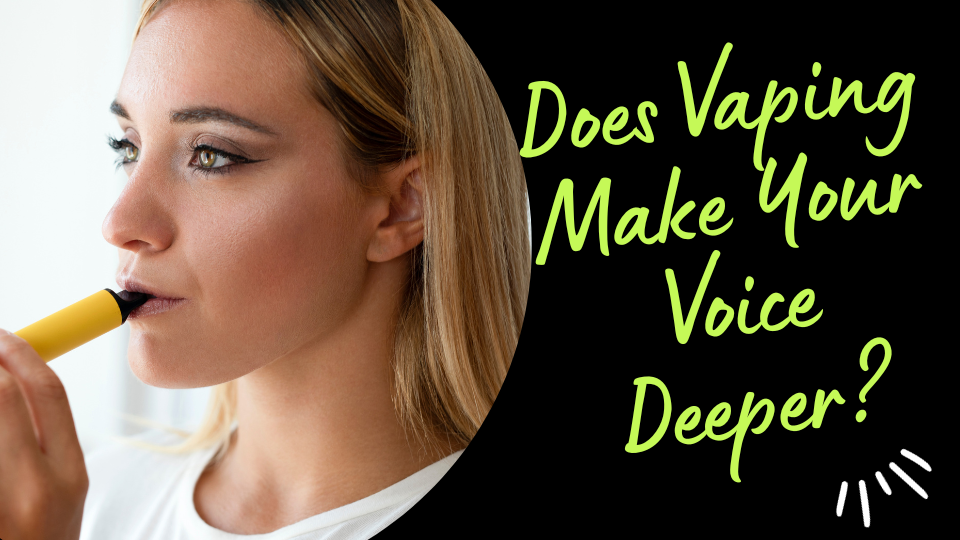
Short answer: not in the way you are hoping. Vaping cannot give you the smooth, deeper voice that puberty gives, because that change is driven by hormones reshaping your vocal cords, and nothing you inhale rewires that. There is a catch, though. Vaping can still change how your voice sounds, and the direction it pushes is toward rough, dry, and damaged, not deep and rich. In the worst case, long-term irritation can lower and coarsen a voice, but as an injury, not an upgrade.
Here is the actual science of what sets your pitch, why vaping cannot copy it, and what the newest research shows vaping does to the vocal cords.
What actually makes a voice deep
Pitch comes down to how fast your vocal cords vibrate. Longer, thicker, heavier cords vibrate more slowly and produce a lower sound, the same way a thick bass string sounds lower than a thin one. A typical adult man speaks somewhere around 100 to 120 vibrations per second, and a typical adult woman around 200 to 220, roughly an octave apart.
That gap opens up at puberty, and testosterone is what drives it. In boys, the surge of testosterone makes the voice box grow and the vocal cords grow longer and thicker, which drops the pitch by close to an octave over a year or two. This is a structural, hormonal change built into the body’s development. It is the only thing that gives most people a genuinely and permanently deeper speaking voice.
Why vaping cannot give you the deeper voice you want
Vaping does not touch any of that. It does not raise your testosterone, it does not lengthen your vocal cords, and it does not enlarge your voice box. So it simply cannot produce the clean, resonant drop that puberty produces. Whatever a vape does to your throat, it is not remodeling the anatomy that decides your natural pitch.
This is worth spelling out because the question comes up a lot from two groups. People early in a voice-deepening journey sometimes wonder if vaping will help, and it will not. The hormone that deepens a voice is testosterone, prescribed and monitored by a doctor, not anything in an e-cigarette. And curious teenagers sometimes assume vaping will speed up the natural change, which it also will not do. If anything, it works against a healthy voice.

The uncomfortable part: irritation can lower a voice, but you do not want it
There is one real way that inhaling something can lower your pitch over time, and it is the reason the classic gravelly “smoker’s voice” exists. It is a condition called Reinke’s edema.
When the vocal cords are irritated for a long time, the soft layer just under their surface fills with fluid and swells. Heavier, waterlogged cords vibrate more slowly, so the voice drops in pitch and turns rough and gruff. The Cleveland Clinic lists “gradual deepening of your voice” as a hallmark symptom and calls long-term smoking the number one cause (Cleveland Clinic). It is common enough in women that a newly deep or masculine-sounding voice is often the first thing they notice.
So yes, chronic irritation can technically deepen a voice. But this is damage, not development. It comes with hoarseness, a rougher sound, and often needs surgery to fix. Nobody chooses this voice on purpose. The takeaway matters for the original question: the only path by which inhaling deepens a voice is the injury path, and that is the opposite of the attractive deep voice people picture.
Where vaping fits, according to the research
Vaping is newer than smoking, so the science is younger, but it is landing in the same place. The vocal cords sit right in the path of the aerosol, so they are among the very first tissues the vapor hits.
A 2025 review in the Journal of Voice pulled together 20 studies on e-cigarettes and the voice and reached a clear conclusion: vaping can inflame the lining of the vocal folds, its ingredients dry them out, and together that worsens voice quality and raises the risk of coughing and hoarseness (Monteiro et al., Journal of Voice, 2025). A laboratory study in The Laryngoscope went a step deeper and exposed human vocal-cord cells directly to vape vapor. The vapor, with or without nicotine, was toxic enough to kill those cells. Cigarette smoke did more damage and also broke DNA strands, but the vapor was still harmful on its own (Martinez et al., The Laryngoscope, 2023). Follow-up work has since found similar effects in the living larynx and signs of inflammation in vocal-cord cells exposed to e-liquid (Easwaran et al., 2024; Basu et al., 2025).
Put simply, the honest comparison is that cigarettes are worse for the voice than vaping, but “less bad than smoking” is not the same as harmless. That gap between “safer” and “safe” runs through the whole category, as our wider look at whether Luto vapes are safe spells out for nicotine disposables in general. The direction of every finding is the same: vaping irritates, dries, and damages the exact tissue that produces your voice.
The drying problem few people connect to their voice
One ingredient deserves singling out. Propylene glycol, the base of almost every e-liquid, is a humectant, which means it pulls in and holds moisture. Inhaled as a warm aerosol many times a day, it draws water away from the throat and vocal cords.
That matters because vocal cords have to stay wet to vibrate smoothly. Dry cords catch and stiffen, which is why heavy vapers often notice a scratchy, cracking, or weaker voice, especially first thing in the morning. It is also why the effect can come on faster than people expect, well before any long-term damage. The 2025 review flagged this drying of the vocal folds as one of vaping’s clearest effects on the voice. The same dry, flavored aerosol does not stop at the vocal cords, either; it washes over the whole mouth on the way down, which is part of why vaping is tied to stained, yellowing teeth and other oral signs a dentist can often spot.
If you sing or talk for a living
For singers, teachers, actors, and anyone whose voice is their instrument, the first thing to go is usually the top of the range and the ease of hitting notes cleanly. Online, singers frequently describe losing their upper register after taking up vaping, and that lines up with the research: inflamed, dried-out cords lose flexibility, and flexibility is what smooth high notes and clean projection depend on.
If you rely on your voice, the safest move is not to vape at all. If you do, heavy hydration, warm-ups, and keeping use low will limit the damage, but they will not cancel it.
Will your voice recover if you stop?
Often, yes, and the earlier you stop, the better the odds. The dryness and mild irritation from vaping tend to ease within days to weeks of quitting, as the cords rehydrate and the inflammation settles. For comparison, laryngologists note that smoking-related voice changes often improve noticeably within a few weeks of quitting, with fuller recovery taking months (Cleveland Clinic). More serious changes are less certain. Mild Reinke’s edema can partly improve after a person stops the irritant, but advanced cases usually need surgery to restore the voice (Cleveland Clinic). The general rule is that the shorter and lighter the use, the more fully a voice bounces back. If cutting nicotine is the real goal, a swap that skips the inhaled aerosol, like nicotine pouches, keeps it away from your throat entirely.
What actually changes your vocal pitch
It helps to see the different forces side by side, because “deeper” can mean very different things.

| What changes the voice | Effect on pitch | What drives it | Can vaping cause it? |
|---|---|---|---|
| Puberty | Deepens smoothly and for good | Testosterone reshaping the cords | No. Vaping does not affect hormones |
| Reinke’s edema | Lowers and roughens, as damage | Long-term irritation, mainly smoking | Possibly over years, as injury, not the goal |
| Dryness and inflammation | Hoarse, cracked, weaker, less range | Propylene glycol and irritation from vaping | Yes, and often fairly quickly |
| Talking with vapor in the lungs | Brief muffling in the moment | Aerosol sitting in the airway | Yes, but it passes in seconds |
The pattern is clear. The one column that produces the deep voice people actually want is puberty, and vaping has no hand in it. Every effect vaping does have lands in the other rows, where the voice gets worse, not better.
Frequently asked questions
Does vaping make your voice deeper?
Not in the way people mean. Vaping cannot create the smooth, permanent deepening that puberty and testosterone produce. Over a long time, chronic irritation can lower and roughen a voice, but that is vocal damage, not the attractive deep voice people picture.
Can vaping deepen your voice for a voice transition?
No. A deeper voice in a masculinizing transition comes from testosterone therapy prescribed by a doctor, which physically changes the vocal cords. Vaping does not affect hormones and will not help, while it does put the voice at risk of irritation and damage.
Does vaping make your voice raspy or hoarse?
Yes, it can. Propylene glycol dries the vocal cords and the aerosol inflames them, which leads to a scratchy, raspy, or hoarse voice. Heavy vapers often notice it most in the morning.
Is vaping worse than smoking for your voice?
Cigarettes appear to be worse. In a lab study, cigarette smoke killed more vocal-cord cells and damaged DNA, while vape vapor did less harm. But the vapor was still toxic to those cells, so vaping is not safe for the voice, just less harmful than smoking.
Will your voice get better if you stop vaping?
Usually, especially if you stop early. Dryness and mild irritation tend to ease within days to weeks as the cords rehydrate. Longer or heavier use, or actual swelling of the cords, may not fully reverse and can need medical care.
Can vaping ruin your singing voice?
It can hurt it. Singers commonly lose their upper range and clean projection because inflamed, dried-out cords lose flexibility. Anyone who sings or speaks professionally is better off not vaping at all.
So, will vaping deepen your voice?
No, at least not the way you want. A genuinely deeper voice is built by testosterone during puberty, and vaping does nothing to that machinery. What vaping does instead is dry, inflame, and slowly damage the vocal cords, which the latest research links to hoarseness and worse voice quality. The only route by which inhaling ever lowers a voice is through injury, the swollen, gravelly “smoker’s voice,” and that is a condition to avoid, not a look to chase. If your goal is a strong, deep, reliable voice, vaping works against it, not for it.
This article is general information and is not a substitute for personal medical advice. If you have ongoing hoarseness or a voice change that lasts more than two to three weeks, see a doctor or an ENT, since lasting voice changes can have other causes.
Sources
- Monteiro, Haddad and Azevedo, Journal of Voice, 2025: Effects of e-cigarette use on voice, an integrative literature review
- Martinez, Easwaran, Ramirez and Erickson-DiRenzo, The Laryngoscope, 2023: Effects of e-cigarette vapor and cigarette smoke in cultured vocal fold fibroblasts
- Easwaran et al., The Laryngoscope, 2024: Effects of short-term e-cigarette aerosol exposure in the mouse larynx
- Basu, Li and Mongeau, Toxicology Reports, 2025: E-liquid toxicity triggers inflammation in human vocal fold fibroblasts
- Cleveland Clinic: Reinke’s edema
- Cleveland Clinic: Is smoker’s voice real?

Alex is a vaping enthusiast with 6 years of hands-on experience across disposable vapes, pods, e-liquids, and flavors. He shares his reviews, insights, and practical tips on vaping with the PureVapeReviews community to help readers make better-informed choices.